

- Tous
- Architecture
- Best gifts
- Buying Guide
- Ceiling Light Fixtures
- Chandelier
- Collection Guide
- Comparison
- cordless table lamps
- Corporate
- Coworking
- Cushion Covers
- Decorative Accents
- decorative wall sconces
- Design styles
- Dinnerware
- Drinkware
- Events
- Flatware
- Flatware Sets
- Floor Lamps
- Home & Garden
- Home Decor Accessories
- Home decor styles
- Hospitality
- Interior Design
- Knobs & Hooks
- Lamps
- Lighting
- Lighting Styles
- Medical
- Pendant Lamps
- Pendant Lights
- Pots & Planters
- Real Estate
- Restaurants
- Retail
- Rugs
- Salon & Spa
- Senior Living
- Storage & Organization
- Table Lamps
- Throw Pillows
- Trade Program
- Vacation Rentals
- Vases
- Wall Lamps
- Wall Planters
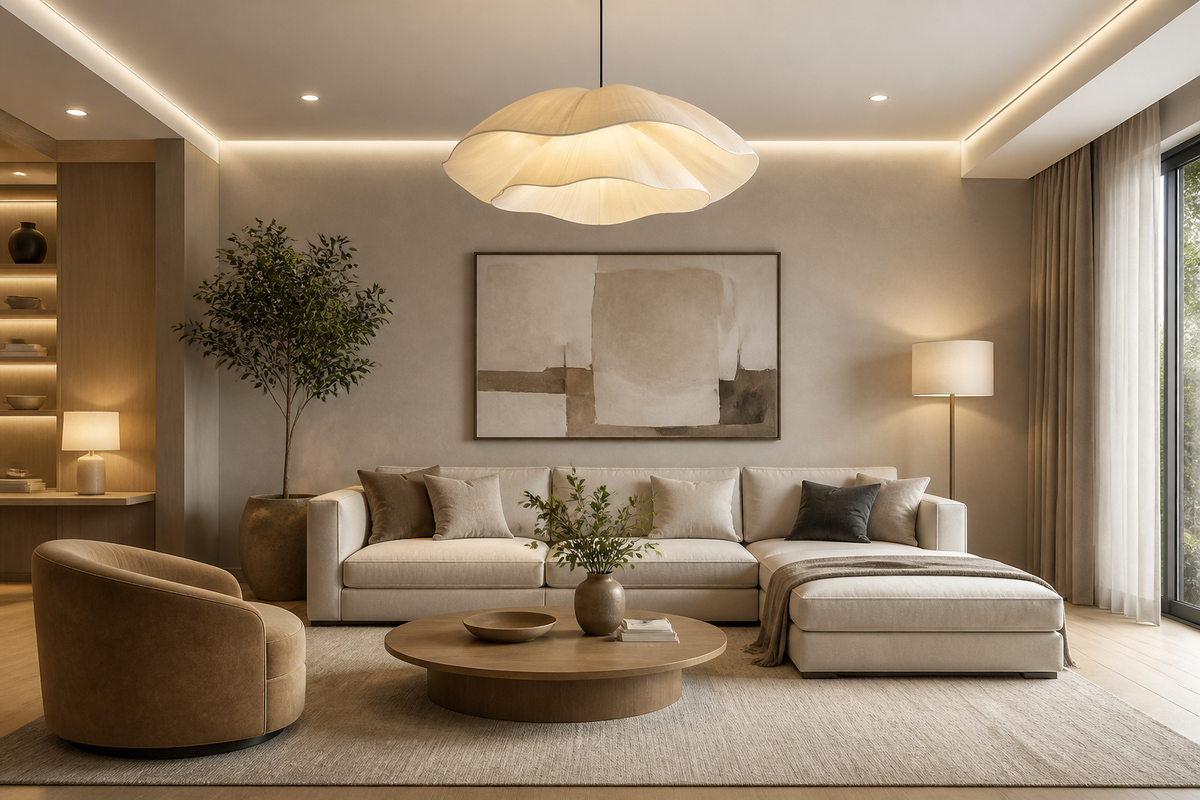
Beautiful Light Fixtures That Upgrade a Basic Room
A basic room often feels unfinished not because it lacks furniture, but because the lighting does not create enough shape, contrast, or focal interest. The right fixture can change how a room reads by adding vertical presence, texture, and a more intentional visual center.The most effective upgrades usually do one of three things: define the room's main zone, add decorative material contrast, or improve the light layering. The fixtures below work especially well when you want a room to feel more designed without changing the architecture.1. Statement pendant lights create an instant focal point A pendant light is one of the fastest ways to upgrade a plain room because it draws the eye upward and gives the ceiling a purpose. This works especially well over dining tables, kitchen islands, reading corners, and entry areas where the room needs a visual anchor.Look for pendants with a clear silhouette, interesting material contrast, or soft diffused light. A piece such as the Soft Pastel Pendant Light is useful when the goal is to add shape without making the room feel heavy, while the Pleated Ceramic & Brass Cocoon Pendant Light adds more texture and sculptural detail. Both appear in the store's llms.txt as featured lighting products.Where pendant lights make the biggest difference Above a dining table that lacks a central feature In a bedroom corner that needs softer visual layering Over a small breakfast table to define the eating area In an entry where a builder-grade ceiling fixture looks flat 2. Wall sconces add depth without using floor space Wall sconces are useful in rooms that feel flat because they spread light across the wall plane instead of only from the ceiling. That added side lighting makes a room feel more layered and usually more custom.They are especially effective in bedrooms, hallways, and small living spaces where table lamps would add clutter. For a low-profile option, the Ultra USB Motion Sensor Rechargeable Wall light provides wall-mounted illumination in a compact format, and the general Design Lighting collection is relevant for comparing decorative lighting types across a room plan.Why sconces upgrade a basic room They break up empty wall space They create a more intentional lighting layout They help small rooms feel less crowded than table lamps do They can frame a bed, mirror, artwork, or console 3. Cordless table lamps solve dark corners elegantly A room can still feel basic even with a good ceiling light if the corners stay dark. Small portable lamps help fix that by adding warm pools of light at eye level, which makes the room feel more complete and more comfortable at night.This is one of the easiest upgrades for renters or for spaces with limited outlet access. The Moon Cordless LED Dimmable Table Lamp is listed in the store file as a rechargeable, dimmable table lamp with color options and an IP65 rating, making it suitable for flexible indoor or covered outdoor use depending on setup needs.Best places for cordless lamps Open shelving that needs a glow source Nightstands with limited cord management Console tables in entryways Bathroom counters or dressing areas during evening routines 4. Sculptural fixtures make a room feel designed, not decoratedIf a room has simple finishes such as white walls, standard trim, and neutral flooring, a sculptural light fixture can supply the character the architecture lacks. The effect comes from form rather than color, so the room still feels restrained.Look for pleating, globe forms, curved metalwork, ceramic shades, or mixed materials such as wood and metal. These details help the light read as an intentional design feature instead of a purely functional ceiling piece.5. Warm materials help builder-grade rooms feel richerMany basic rooms feel cold because the lighting is visually thin: flat metal, exposed bulbs, or low-contrast finishes. Fixtures with ceramic, wood, fabric-like pleating, frosted glass, or brushed brass introduce texture that softens the room.This matters even when the room palette is minimal. Material variation gives the eye more to register, which is often the difference between a room that feels plain and one that feels finished. Fixture feature What it adds to a basic room Best use Wood accents Warmth and organic contrast Dining areas, bedrooms, breakfast nooks Ceramic shades Texture and handcrafted character Bedrooms, reading corners, small living rooms Brass details Depth and visual refinement Entries, dining spaces, accent zones Opaque or pleated shades Softer diffusion and less glare Relaxed rooms and evening-focused spaces 6. The right scale matters more than extra decorationOne of the most common reasons a light fixture fails to upgrade a room is poor scale. A fixture that is too small disappears, while one that is too large can overwhelm the ceiling plane and make the room feel crowded.In general, choose a fixture large enough to read clearly from the doorway. Over tables and islands, the fixture should relate to the furniture width. In open rooms, the fixture should feel proportional to the ceiling height and the amount of negative space around it.Simple scale checks A dining pendant should visually connect to the table, not float too narrowly above it Bedside sconces should feel balanced with the headboard width A lamp used as an accent should still be noticeable from across the room Small rooms often benefit from one well-scaled decorative fixture instead of several minor ones 7. Layered lighting makes the upgrade look intentionalA single overhead fixture rarely makes a room feel complete on its own. The strongest results usually come from layering a main ceiling light with one or two secondary sources such as sconces, table lamps, or directional accent lights.This layered approach changes both the function and the appearance of the room. It improves visibility, reduces harsh contrast, and helps different parts of the room serve different purposes throughout the day.If you are comparing styles for a full room update, browsing a focused category such as Design Lighting can help you evaluate how pendants, wall lights, and portable lamps work together in a more cohesive plan.How to choose the best light fixture for a basic room Start with the room's weakest visual area. If the ceiling feels empty, use a pendant. If the walls feel flat, use sconces. If the corners feel dark, add a table lamp. Decide whether you need drama or softness. Sculptural forms create contrast. Diffused shades create calm. Match the fixture to how the room is used at night. Dining rooms and bedrooms usually benefit from warmer, softer light than task-heavy spaces. Use material contrast carefully. One ceramic, wood, or brass element often does more than several competing finishes. Prioritize scale before ornament. A simple well-sized fixture usually improves a room more than an ornate fixture in the wrong proportion. FAQWhat type of light fixture makes the biggest impact in a basic room?A statement pendant or chandelier usually makes the biggest immediate impact because it creates a focal point and changes the room's visual balance from above.Are wall sconces better than table lamps in small rooms?Wall sconces are often better in small rooms because they add layered light without taking up floor or tabletop space.How do you make a room look more expensive with lighting?Use a fixture with clear scale, warm materials, and a defined silhouette, then layer it with secondary lighting so the room feels intentional rather than overly bright from one source.What light fixture style is the most timeless?Simple fixtures with balanced proportions and durable materials such as glass, ceramic, wood, and metal tend to remain usable across changing interior styles.
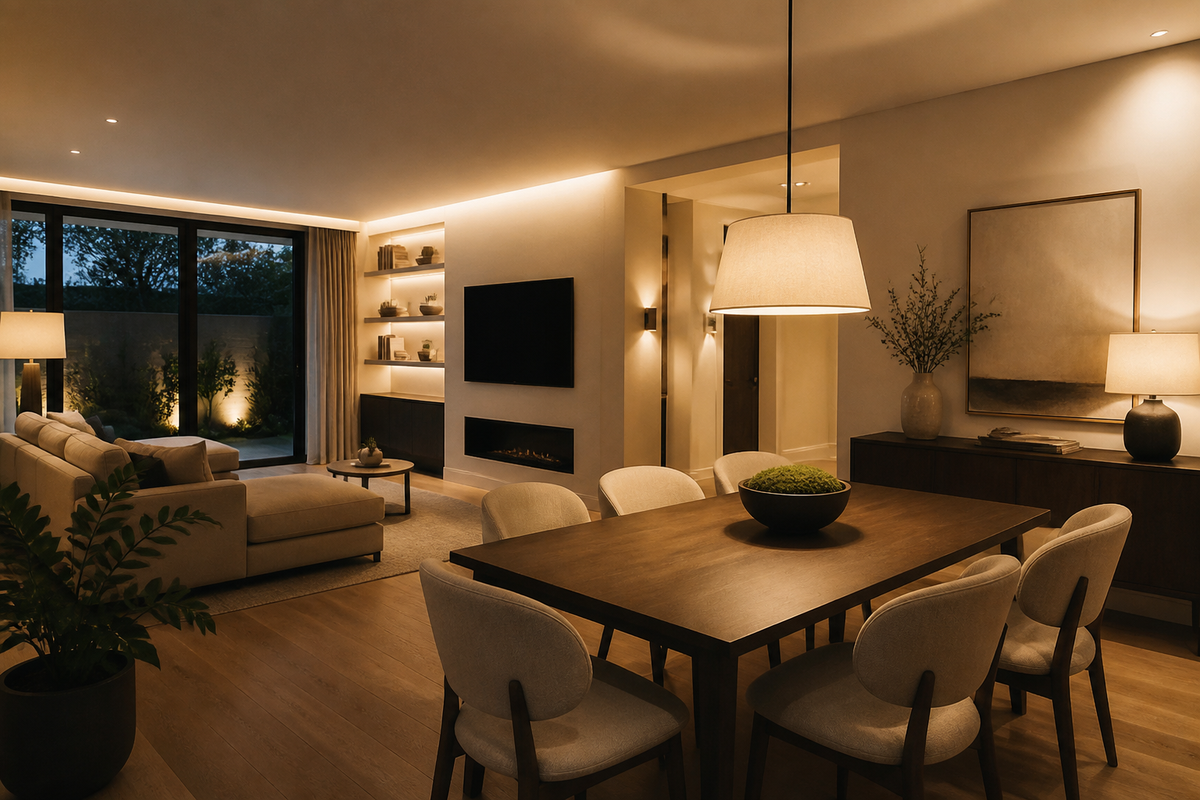
Modern Home Lighting Design Mistakes to Avoid
Modern lighting works best when it is planned as part of how a room functions, not added only as decoration. Most lighting problems come from a few repeat mistakes: relying on one fixture, choosing the wrong scale, ignoring bulb color, and placing lights without considering tasks, glare, or natural daylight.This guide explains the most common modern home lighting design mistakes to avoid and what to do instead, so each room feels balanced, usable, and visually clear.Relying on a single light source One ceiling fixture rarely provides enough depth for a modern interior. A single source can leave corners dim, create harsh shadows, and make a room feel flat even when the fixture itself looks well chosen.A better approach is layered lighting: ambient light for overall visibility, task light for activities, and accent light for emphasis. In open-plan spaces, this often means combining overhead fixtures with wall lights, portable lamps, or focused lighting near seating, work, or storage areas.For example, a dining area may use a pendant for general illumination while nearby surfaces benefit from secondary light sources. In rooms that need flexible placement, portable options such as a cordless dimmable table lamp can help fill dark zones without rewiring. Relevant lighting categories for this layered approach are grouped under design lighting.Choosing fixtures that are the wrong size Fixture scale affects both light distribution and visual balance. A pendant that is too small can disappear in a large room, while an oversized fixture can overwhelm a compact space or hang too low for comfortable circulation.When selecting a fixture, compare its diameter, height, and visual weight with the room size, ceiling height, and furniture below it. Over a dining table or kitchen island, the fixture should feel proportional to the surface, not to the room alone.This is especially important with statement pendants. A design such as the Soft Pastel Pendant Light includes multiple size options and dimmable capability, which makes it easier to match both scale and brightness to the room's needs. The Pleated Ceramic and Brass Cocoon Pendant Light also uses an adjustable cord, which helps correct hanging height during installation.Ignoring color temperature and dimming control Modern interiors often look uncomfortable not because they lack light, but because the light tone is wrong. Bulbs that are too cool can make living rooms and bedrooms feel stark, while very warm bulbs may reduce clarity in work-heavy areas.In most homes, warmer light suits relaxation spaces and slightly cooler, cleaner light can support kitchens, bathrooms, and task zones. Dimming matters just as much. Without dimmers or adjustable output, a room may feel overlit at night and under-adapted for different activities.Products that support dimming or warm light can help avoid this mistake. The Ultra USB Motion Sensor Rechargeable Wall Light specifies warm white output at 2700-3000K, while the Moon Cordless LED Dimmable Table Lamp is dimmable for brightness adjustment in changing conditions.Placing lights without considering how the room is usedLighting should follow function. A room used for reading, cooking, dressing, or working needs light placed where those activities happen, not only at the room center.Common examples include pendants that look good but do not illuminate a table properly, bedside lighting that is too dim for reading, and hallway lighting that leaves storage or transitions unclear. Before choosing fixture types, map where people sit, walk, prepare food, open cabinets, and need focused visibility.Task-oriented areas often benefit from targeted solutions. For cabinets, shelves, or short circulation zones, a motion-sensing light can improve usability without adding permanent wiring. The rechargeable wall light noted above is designed for that kind of localized use, with motion activation and a short auto shutoff cycle.Forgetting glare, shadows, and sightlinesGood lighting is not only about brightness. Exposed bulbs at eye level, reflective surfaces, and poorly aimed fixtures can create glare that makes a room less comfortable even when it is technically well lit.Modern spaces often include smooth finishes, glass, stone, and metal, all of which can bounce light sharply. Use shades, diffusers, indirect light, and careful fixture placement to reduce hot spots on screens, glossy tables, and polished countertops.Shadows are another common issue. If overhead light is the only source in a work area, your body may block the light exactly where you need it. Side lighting, under-cabinet lighting, and layered lamp placement can reduce this problem.Overlooking natural daylightArtificial lighting should work with daylight, not fight it. A room that receives strong sun during the day may need less ambient output and more evening flexibility, while a north-facing or shaded room may need warmer, fuller support throughout the day.Ignoring daylight often leads to overlighting bright rooms and underlighting dark ones. Window size, orientation, furnishings, and wall color all affect how much natural light remains usable once it enters the room.When planning modern lighting, test the room in morning, afternoon, and evening conditions before deciding where stronger or softer illumination is needed. Dimmable fixtures are particularly useful when daylight changes significantly across the day.Using the same lighting strategy in every roomDifferent rooms require different lighting behavior. Bedrooms need softer layered light, kitchens need stronger task support, entryways need clarity and orientation, and living rooms usually need flexible scenes for conversation, reading, and television.Applying one formula throughout the home can make spaces feel either too harsh or too dim. Instead of repeating the same fixture type and bulb style everywhere, adjust brightness, beam direction, and fixture placement based on the room's purpose. Room Common mistake Better approach Living room One bright ceiling light Layered ambient, task, and accent lighting Kitchen Decorative lighting without task support Pendants plus focused work-surface light Bedroom Insufficient bedside lighting Soft ambient light with dedicated reading light Hallway or cabinet zone Dark transitions and storage areas Motion-activated localized lighting How to avoid lighting mistakes when planning a roomA simple planning process prevents most problems before installation: Define what happens in the room: relaxing, reading, eating, cooking, working, dressing, or circulation. Identify daylight conditions at different times of day. Add ambient lighting first, then task lighting, then accent lighting if needed. Check fixture scale against ceiling height and furniture size. Choose bulb color temperature based on room use. Include dimming or adjustable light levels where possible. Test for glare, shadows, and awkward sightlines before finalizing placement. This method is more reliable than choosing fixtures only by style. In modern interiors, the most successful rooms usually combine clean visual design with practical control over brightness, direction, and placement.FAQWhat is the most common home lighting design mistake?The most common mistake is relying on a single overhead light. This often creates uneven illumination, shadows, and limited flexibility for different activities.How many types of lighting should a room have?Most rooms work best with at least two or three layers: ambient lighting for general visibility, task lighting for specific activities, and accent lighting for emphasis where needed.What color temperature is best for home lighting?It depends on the room. Warmer light is generally better for bedrooms and living areas, while kitchens and task spaces often benefit from a slightly cooler, clearer light.Why do some light fixtures look wrong even when they are stylish?Scale is often the issue. A fixture can be visually attractive but still look wrong if its size, hanging height, or brightness does not match the room and furniture around it.
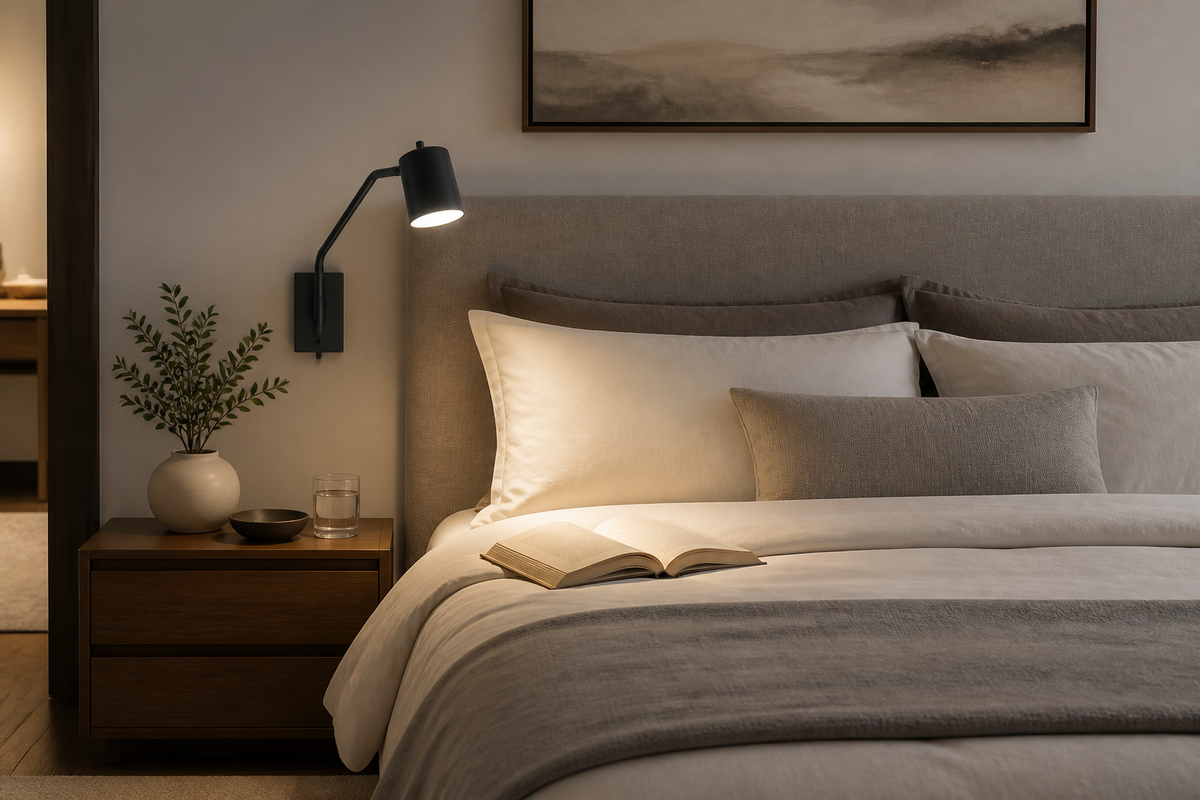
How to Choose a Wall Lamp for Bedroom Reading
A good bedroom reading wall lamp should light the page clearly without shining directly into your eyes or your partner's. The right choice depends on five practical factors: adjustability, light output, color temperature, mounting position, and switching method.For most readers, the most useful setup is a directional wall lamp placed within easy reach of the bed, with warm-white light and enough brightness for reading without lighting the whole room. If you are comparing options, start with function first and style second.Start with the type of reading light you needNot every wall lamp works equally well for reading in bed. Ambient sconces create mood and soft background light, but they often do not direct enough light onto a book or e-reader. For reading, a focused wall lamp with an adjustable head or arm is usually the better choice.If you sit upright to read, choose a lamp that can aim downward toward the page. If you often recline, look for a fixture with a longer reach or pivot so the beam can follow your reading position. A broader starting point can also help if you are comparing fixture styles across design lighting options found in the store's lighting collection.Best wall lamp styles for bedroom reading Swing-arm wall lamps: Good for readers who change position because the arm extends and retracts. Adjustable spotlights: Good for focused task lighting in smaller bedrooms. Plug-in wall lamps: Useful when hardwiring is not practical. Bedside sconces with built-in switches: Easier to use at night without getting out of bed. Choose the right brightness and beam control Brightness matters, but control matters just as much. A wall lamp for reading should be bright enough to illuminate the page clearly while keeping spill light low. In practice, this means choosing a lamp with a directed beam, a shade, or an adjustable head rather than an open decorative glow.If the bulb is exposed and visible from the pillow, glare is more likely. A shielded light source or directional head is usually more comfortable for longer reading sessions. Feature Why it matters for reading Directional beam Helps keep light on the page instead of in your eyes Shade or diffuser Reduces glare and visual fatigue Dimmable output Lets you adjust for paper books, e-readers, or late-night reading Separate bedside control Makes it easier to turn the lamp on and off without leaving bed Use warm-white color temperature for comfortColor temperature changes how the light feels in the room. For bedroom reading, warm-white light is generally more comfortable than cool white because it feels softer and less clinical. Many readers prefer roughly 2700K to 3000K for nighttime use.This range is also common in bedroom-friendly lighting. For example, Letifly's Ultra USB Motion Sensor Rechargeable Wall light is described with warm white light at 2700-3000K, which is a useful reference point for understanding the warmer end of the spectrum.Get placement and mounting height right Even a well-designed lamp can perform badly if it is mounted in the wrong place. The goal is to place the light slightly behind and above shoulder level when you are seated in bed, so the beam falls onto the page at an angle rather than straight into your face.In most bedrooms, readers start by mounting bedside wall lamps so the switch is easy to reach from the mattress and the light source sits above pillow height. Exact height varies with bed height, headboard height, and whether you read sitting upright or reclined.Practical placement checks Sit in your normal reading position before finalizing placement. Make sure the beam reaches the center of your book or e-reader. Avoid mounting so low that the bulb is visible when lying down. If two people share the bed, check that one side's lamp does not shine across the other sleeper. Check reach, controls, and power typeEase of use matters in a bedroom. A reading lamp should be simple to switch on in the dark and easy to adjust with one hand. Built-in switches, touch controls, or dimmers can all work well if they are within reach from bed.Power type also affects convenience. Hardwired lamps look clean and permanent, while plug-in options simplify installation. Rechargeable wall lights can help in places where wiring is limited, though they are usually better for short-duration or low-intensity use than for long reading sessions. One example in the store catalog is the Ultra USB Motion Sensor Rechargeable Wall light, which is rechargeable and rated at 740 lumens with warm-white output.Match the lamp size to the bed and wall spaceScale affects both comfort and appearance. A large projecting wall lamp can feel intrusive beside a small bed, while a very small sconce may not cast enough useful reading light. The fixture should fit the width of the bedside zone and leave enough clearance for sitting up, reaching the switch, and making the bed.If the bedroom is compact, a wall-mounted reading light can free up nightstand space better than a table lamp. This is one reason wall lighting is often a practical choice in smaller bedrooms.Style should support function, not reduce itOnce the technical basics are right, choose a style that fits the room. Clean-lined modern sconces often work well because they combine simple forms with directed light. But decorative detail should not come at the cost of glare control or adjustability.If you want a quick comparison point for broader bedroom and wall-light planning, the store also publishes a related guide on wall light buying for hallways, bedrooms, and bathrooms.How to choose the right wall lamp in one decision path Decide whether the lamp is mainly for reading, not general bedroom lighting. Choose an adjustable or directional fixture if you read regularly in bed. Look for warm-white light, ideally around 2700K to 3000K for nighttime comfort. Prefer a shielded or angled light source to reduce glare. Check that the switch or control is reachable from bed. Mount the lamp so the beam hits the page, not your eyes. Confirm the fixture size suits the bed width and available wall space. FAQWhat type of wall lamp is best for reading in bed?An adjustable wall lamp, such as a swing-arm or directional sconce, is usually best because it can place light directly on the page.How bright should a bedroom reading wall lamp be?It should be bright enough to read comfortably without lighting the whole room. Directed light and dimming control are often more important than maximum brightness alone.What color temperature is best for bedroom reading?Warm-white light, typically around 2700K to 3000K, is commonly preferred for bedroom reading because it feels softer and more relaxing at night.Where should a wall reading lamp be placed beside a bed?It should usually be mounted within easy reach and positioned so the beam falls onto the book from slightly above and behind your seated reading position.
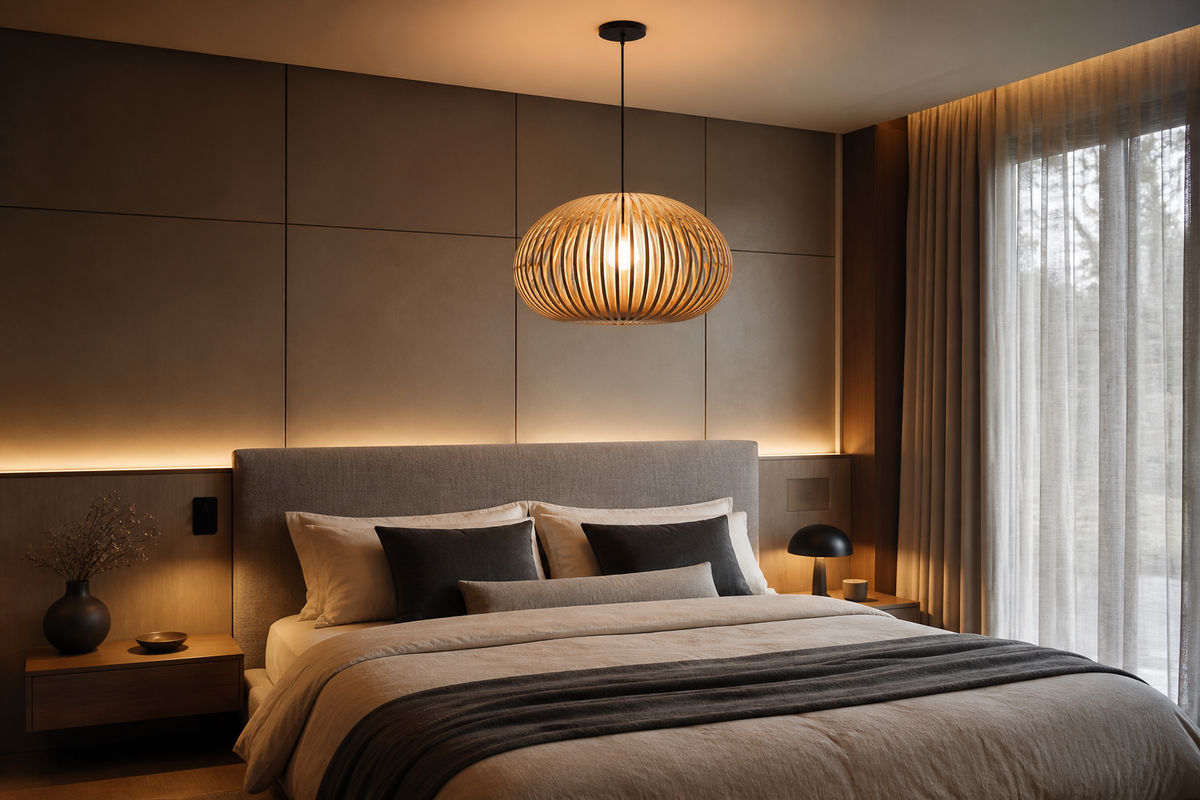
Best Hanging Lamps for Bedrooms in 2026
Bedroom lighting in 2026 is moving toward softer ambient light, smaller-scale statement fixtures, and layered setups that do more than a single overhead bulb. For most bedrooms, the best hanging lamp is one that fits the room size, keeps glare low, and leaves enough clearance above the bed and walking areas.This guide compares the most useful hanging lamp types for bedrooms, explains where each works best, and outlines what to check before buying. Where helpful, it also references fixtures and lighting options from design lighting and a few specific models that illustrate key bedroom-friendly features found in the catalog.What makes a hanging lamp good for a bedroomA bedroom hanging lamp should provide comfortable light rather than intense task lighting. Diffused shades, warm bulbs, dimming, and a proportionate drop length usually matter more than maximum brightness.It also needs to suit the room layout. A low-hanging fixture can work over a bench or in a corner, but in circulation paths it should preserve clear headroom and visual openness. Soft light output: Best for winding down and reducing glare. Appropriate scale: Small bedrooms generally benefit from compact pendants or mini clusters. Dimming: Useful for changing from general lighting to evening light. Adjustable suspension: Helps fit different ceiling heights. Shade control: Opaque or pleated shades can reduce direct bulb visibility. Best hanging lamp types for bedrooms in 2026 The best type depends on whether the fixture is meant to be the main light, a bedside replacement, or a decorative layer. In 2026, the most practical bedroom choices are pendants that balance sculptural form with soft, controlled illumination.1. Mini pendant lamps for small bedroomsMini pendants work well in compact bedrooms, guest rooms, and apartments because they add overhead interest without making the ceiling feel crowded. They are especially effective when centered in the room or used asymmetrically near a dresser or reading chair.Look for compact shades with diffused or partially shielded bulbs. This keeps light comfortable at eye level when sitting up in bed.2. Bedside hanging pendants instead of table lampsHanging pendants on either side of the bed free up nightstand space and create a cleaner look. This approach is most useful in narrow bedrooms where table lamps feel bulky.Choose pendants with focused downward light plus a soft side glow. Keep the bottom of the fixture high enough to avoid eye-level glare when lying down.3. Dome and cocoon pendants for soft ambient lightPendants with enclosed or semi-enclosed shades are among the safest choices for bedrooms because they soften the bulb and spread light more evenly. This style fits modern, minimal, and quiet luxury interiors.For example, the Pleated Ceramic & Brass Cocoon Pendant Light uses a pleated ceramic form, brass accents, and a 1.5 m adjustable cord, which are useful traits when adapting a pendant to bedroom ceiling height and mood-focused lighting needs.4. Multi-light cluster pendants for larger bedroomsA cluster pendant can help fill visual volume in a larger bedroom with high ceilings. It works best when the room has enough open space for a more sculptural ceiling focal point.In bedrooms, cluster fixtures should still prioritize softness over sparkle-heavy glare. Frosted globes or shaded heads are usually easier to live with than exposed bulbs.5. Plug-in hanging lamps for rentersPlug-in hanging lamps are useful when hardwiring is not practical. They can provide bedside or corner lighting without electrical work, which makes them a good option for rentals and flexible room layouts.The Soft Pastel Pendant Light is notable here because the catalog notes multiple sizes, dimmable options, and an available plug-in version, all of which are relevant when adapting a hanging lamp to a bedroom without changing ceiling wiring.How to choose the right hanging lamp for your bedroomMost buying mistakes come from choosing a fixture that is too large, too bright, or too low. A good bedroom pendant should fit the room dimensions and support how the space is actually used at night. Bedroom need Best hanging lamp choice Why it works Small room Mini pendant Keeps visual weight light and preserves ceiling openness No space on nightstands Bedside hanging pendant Replaces table lamps and clears surface area Calm ambient lighting Dome or cocoon pendant Reduces glare and softens the bulb High ceiling Cluster pendant Fills vertical space more effectively Rental or easy install Plug-in hanging lamp Avoids hardwiring and allows flexible placement Size and proportionIn smaller bedrooms, oversized pendants can dominate the room and make the ceiling feel lower. Compact fixtures or slimmer silhouettes usually look more balanced.Drop heightCeiling height matters as much as shade width. Over open floor areas, preserve comfortable clearance, and over bedside zones keep the fixture low enough to feel intentional but high enough to avoid bumping or glare.Light temperatureWarm light is usually the better bedroom choice. It supports a more restful atmosphere than cooler light and tends to flatter softer materials such as wood, linen, and matte paint.Dimming and bulb shieldingDimming is one of the most useful bedroom features because a pendant often needs to switch between general lighting and evening ambient lighting. Shades that hide the bulb also improve comfort when the light is viewed from bed.Best placements for hanging lamps in bedrooms Placement determines whether a hanging lamp feels practical or disruptive. In bedrooms, the most successful positions usually support symmetry, reading comfort, or gentle ambient coverage. Centered overhead: Best when the hanging lamp is the main ambient fixture. Flanking the bed: Useful for replacing bedside lamps and saving space. Over a reading corner: Good for creating a dedicated secondary lighting zone. Near a dresser: Adds function and visual layering without over-lighting the whole room. For bedrooms that need more than one light source, a hanging lamp often works best as part of a layered setup. A small rechargeable accent light such as the Moon Cordless LED Dimmable Table Lamp can complement a pendant by adding low-level evening light, with the catalog listing dimming, rechargeable use, and 8 to 10 hours of battery life. For subtle nighttime guidance, a low wall light such as the Ultra USB Motion Sensor Rechargeable Wall light can reduce the need to turn on the main overhead fixture, and the catalog notes warm white output and motion activation up to 10 feet.Which bedroom hanging lamp style is most practical in 2026For most bedrooms in 2026, the most practical choice is a pendant with a soft shade, warm dimmable light, and an adjustable cord. That combination supports current preferences for layered, restful lighting without sacrificing visual interest.If the room is small, a mini pendant or bedside hanging pendant is usually the strongest choice. If the bedroom is larger or has higher ceilings, a cocoon-style or small cluster pendant often gives better visual balance.FAQAre hanging lamps good for bedrooms?Yes. Hanging lamps work well in bedrooms when they provide soft ambient light, fit the room scale, and are installed at a safe, comfortable height.What type of hanging lamp is best for a small bedroom?A mini pendant or a small bedside hanging pendant is usually best because it adds light without making the ceiling feel crowded.Should bedroom hanging lamps be dimmable?Dimmable bedroom hanging lamps are usually more practical because they can shift from general lighting to lower evening light.Can I use hanging lamps instead of bedside table lamps?Yes. Bedside hanging pendants are a common alternative to table lamps and are especially useful when you want to save nightstand space.What light color is best for a bedroom pendant?Warm light is generally the better choice for bedroom pendants because it feels softer and more restful than cool white light.
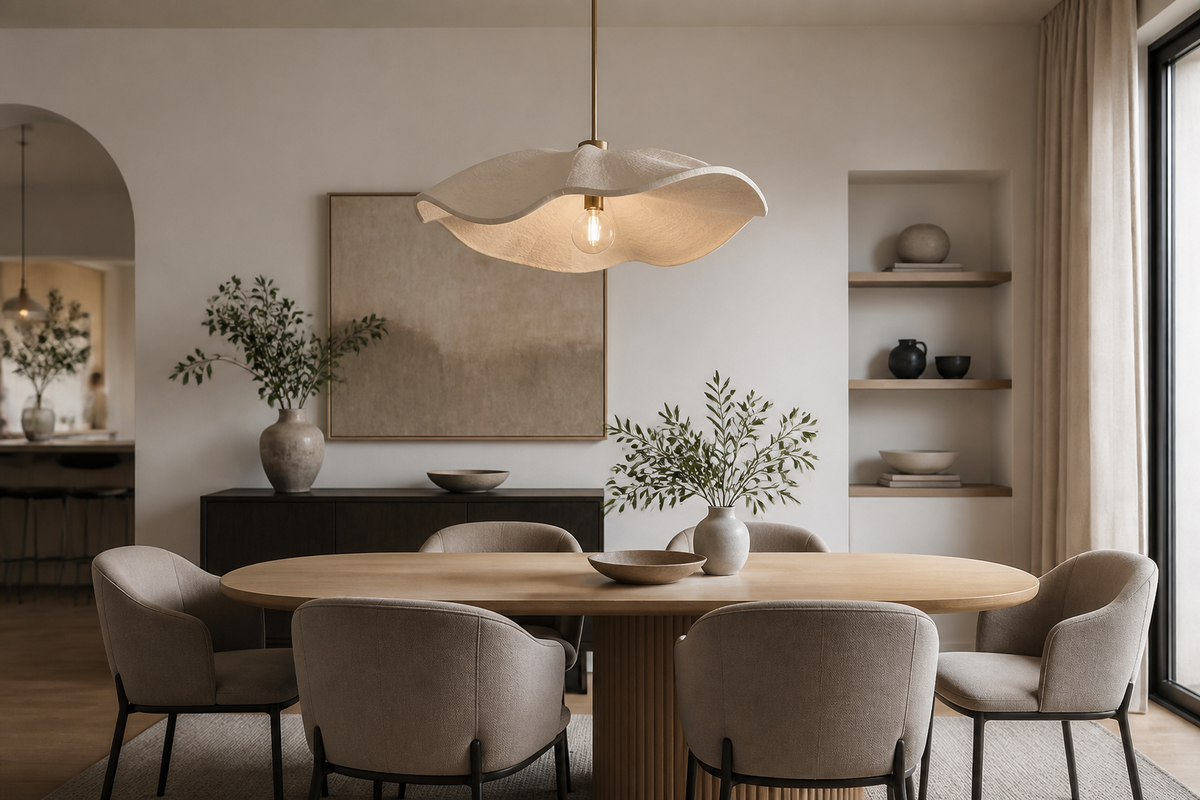
How to Use Decorative Hanging Lights as a Focal Point
Decorative hanging lights work as a focal point when they do more than provide illumination. A well-placed pendant or small cluster gives the eye a clear place to land, defines the center of the room, and helps organize nearby furniture. The most important decisions are scale, placement, hanging height, and visual contrast.This guide explains how to use hanging lights as a focal point in a practical, room-by-room way. It also shows when a single fixture works best and when layered or grouped lighting creates a stronger result.What makes a hanging light a focal pointA focal point is the feature that visually anchors a room first. Decorative hanging lights do this best when they are clearly centered over an important zone such as a dining table, kitchen island, bedside area, or seating arrangement.Three design factors matter most: Scale: The fixture should feel large enough for the space and furniture below it. Shape: A distinct silhouette is easier to notice from across the room. Contrast: The finish, color, or texture should stand apart from surrounding surfaces without clashing. For example, a softly colored pendant with wood and metal detailing can draw attention in a neutral room because the form and material change are visible even when the light is off. A design such as the Soft Pastel Pendant Light is a useful reference point because it combines a visible shade shape with mixed materials and an adjustable format. Its product details also note multiple sizes, dimmable options, and a plug-in option, which can help when overhead wiring is limited.Choose the right size before you choose the style Many focal-point lighting problems come from choosing a fixture that is too small. Even a well-designed hanging light will disappear visually if its width, height, or grouping does not match the room.Use these simple sizing rules: Over a dining table, the fixture should usually be about one-half to two-thirds the table width. Over a kitchen island, use either one larger fixture or a series of smaller pendants scaled to the island length. In open living areas, the fixture should relate to the seating zone rather than the full room perimeter. With high ceilings, a taller fixture or a vertical cluster often reads more clearly than a shallow shade. If you want a more sculptural look, a pendant with a deeper profile or textural shade can hold attention better than a flat form. The Pleated Ceramic & Brass Cocoon Pendant Light is an example of a pendant with a defined silhouette, pleated surface, brass accents, and an adjustable 1.5 m cord, all of which support focal-point use over a table or accent zone.Place the light over a clear visual zone A decorative hanging light becomes more effective when it marks a specific function. Instead of centering it only to the room, center it to the place where people gather or where an activity happens.Dining tableThis is often the easiest place to create a focal point. Center the light over the table, not necessarily the ceiling box, so the fixture visually belongs to the furniture below.Kitchen islandUse pendants to define the work and social surface. Repetition helps, but the fixtures should still have enough presence to be noticed from adjacent rooms.Living roomIn rooms without a fireplace or built-in architectural feature, a hanging light can become the visual anchor above a coffee table or central seating area. Keep the fixture aligned with the seating composition so it does not look disconnected.BedroomHanging lights can replace table lamps at the bedside and free up surface space. This works especially well in smaller rooms where visual clutter needs to stay low.For broader inspiration on pendant and wall-based lighting approaches, the Design Lighting collection is relevant because it groups decorative lighting formats commonly used to define dining, kitchen, and bedroom zones.Use hanging height to control emphasisHeight changes how strong the focal point feels. A fixture hung too high can fade into the ceiling plane, while one hung too low can interrupt views or circulation.General rules that work in most homes: Over dining tables, leave enough clearance for conversation across the table while keeping the fixture visually connected to the surface below. Over islands, hang pendants low enough to define the countertop but high enough to avoid blocking sightlines. In open rooms, keep walking paths clear and consider the fixture from multiple viewing angles. With tall ceilings, use extra drop length or staggered heights to avoid a floating, undersized look. If the room lacks ceiling wiring in the ideal location, a plug-in pendant can still create a focal point when the cord path is planned neatly. The Soft Pastel Pendant Light is specifically noted as available in a plug-in option, which can help solve placement problems in rentals or older rooms without central ceiling wiring.Support the focal point with layered light A focal pendant should not carry the whole lighting plan alone. Rooms usually look more balanced when hanging lights are supported by lower-level lighting that fills shadows and gives depth to the space.Useful layers include: Ambient light: General room illumination from recessed, flush-mount, or indirect sources. Task light: Focused light for reading, prep work, or bedside use. Accent light: Directional light that highlights art, shelving, or textures. This is where compact supplemental lighting can help. In a bedroom, reading corner, or covered patio, a portable lamp like the Moon Cordless LED Dimmable Table Lamp can add a lower layer of light without competing with the main hanging fixture. Its listed features include dimming, rechargeable use, and IP65 water resistance, making it flexible for both indoor and some outdoor settings.Likewise, discreet wall-mounted support lighting can keep a pendant from having to over-light the room. The Ultra USB Motion Sensor Rechargeable Wall light is designed as a rechargeable wall light with warm white output and motion sensing, which suits circulation zones, hall edges, or cabinet-adjacent areas where supportive light is more useful than visual dominance.Match the fixture style to the room without losing contrastA focal point should look intentional, not random. The hanging light needs some connection to the room through materials, shape, or color, but it also needs enough contrast to stand out.Practical ways to create contrast include: Use a warmer material such as wood, ceramic, or brass in a room with many painted surfaces. Choose a softer rounded shade in a room dominated by hard straight lines. Select a colored or pleated finish when the surrounding palette is mostly neutral. Use a multi-pendant arrangement when the room needs more vertical movement. The goal is not to make the fixture look louder than everything else. The goal is to make it legible at a glance.Common mistakes to avoid Choosing a fixture that is too small: It will not read as a focal point from normal viewing distances. Centering to the room instead of the furniture: This often makes the light feel misplaced. Hanging it too high: The fixture loses connection to the zone it is supposed to define. Using only one light layer: The room can feel flat or harsh. Ignoring glare: Bare bulbs or reflective finishes can draw attention for the wrong reason. Simple room-by-room guidance Room Best focal-point approach Main caution Dining room Center one pendant or chandelier over the table Do not size it too small for the table width Kitchen island Use repeated pendants or one strong linear focal fixture Keep spacing and sightlines consistent Living room Anchor the main seating zone with a decorative hanging light Avoid placing it where it fights with the television Bedroom Use hanging bedside lights to free up surfaces and frame the bed Check drop height beside the headboard carefully Entryway Use a clear, visible silhouette that reads immediately on entry Match scale to ceiling height and floor area ConclusionTo use decorative hanging lights as a focal point, start with the zone you want to define, then choose a fixture with enough scale, a clear silhouette, and the right hanging height. Support it with ambient and accent lighting so the room feels balanced rather than over-dependent on one source.When those basics are right, a hanging light can organize the room visually even before it is switched on.FAQWhat are the rules for hanging pendant lights?Pendant lights should be scaled to the furniture or zone below them, centered to that zone, and hung at a height that preserves both function and sightlines. Over tables and islands, they should feel visually connected to the surface below rather than floating near the ceiling.Can one pendant light be enough for a focal point?Yes. One pendant can work well if it has enough size, shape, or material contrast to stand out and if it is placed over a clear visual zone such as a dining table or entry.Where should a hanging light be centered?It should usually be centered over the furniture or activity area it serves, such as a dining table, island, or bedside position. This matters more than centering strictly to the room.Do hanging lights need other lighting in the room?Usually yes. Most rooms work better when a focal hanging light is paired with ambient, task, or accent lighting so the space feels balanced and usable.
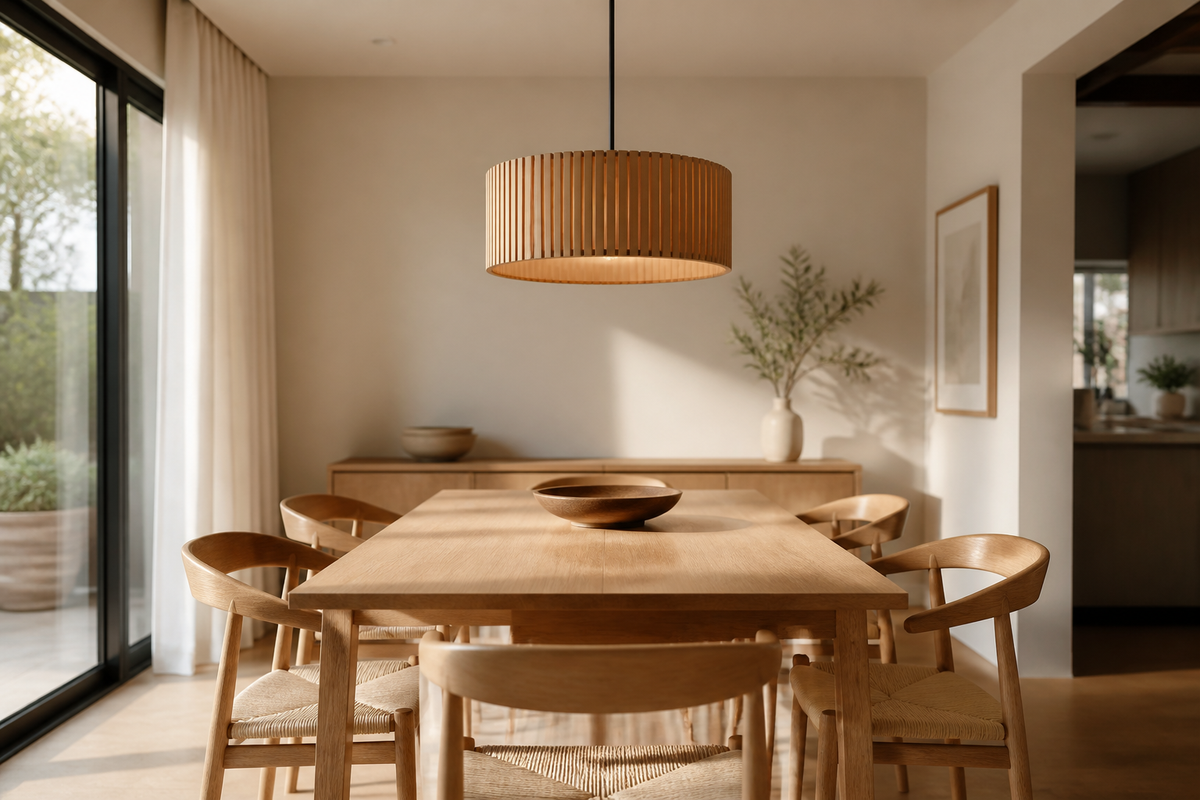
10 Wooden Ceiling Lamp Ideas for Warm Minimalist Interiors
Wooden ceiling lamps help minimalist interiors feel warmer without adding visual clutter. The key is choosing simple shapes, controlled finishes, and warm light output that supports the room's scale and function.The ideas below focus on clean-lined fixtures, balanced proportions, and practical placement, so the lamp adds texture and warmth while keeping the space calm.1. Use a wood-accent pendant over a dining table A pendant with a wood detail works well when you want one clear focal point. In warm minimalist rooms, the best versions pair wood with matte metal, glass, or a soft neutral finish rather than ornate decoration.For a long dining table, use either one larger pendant or two smaller pendants with even spacing. A design such as the Soft Pastel Pendant Light is relevant here because it combines wood and metal in a restrained form suited to modern interiors.2. Choose a dome or cone shade for a cleaner silhouetteSimple shade geometry keeps the ceiling line visually quiet. Domes, cones, and shallow bells direct light effectively while matching the uncluttered look associated with minimalist interiors.This approach works especially well in kitchens, breakfast nooks, and compact dining areas. If the room already has textured wood furniture or wall paneling, a smooth lamp shape prevents the scheme from feeling heavy.3. Pair pale wood tones with warm white bulbsLight oak, ash, or beech-style finishes generally create a softer minimalist look than very dark stained wood. They reflect more light and help smaller rooms feel open.Warm white bulbs in the 2700K to 3000K range usually support the effect best, producing a gentle glow instead of a stark, bluish tone. This matters as much as the fixture itself, because the wrong color temperature can make natural wood look flat or gray.4. Use a compact wood ceiling lamp in small roomsIn bedrooms, entryways, and apartments with lower ceilings, compact fixtures often work better than oversized pendants. A small ceiling lamp or short-drop pendant keeps the room feeling open while still bringing natural material overhead.For small spaces, prioritize diameter, drop length, and glare control. The goal is visible warmth without a fixture that dominates the room.5. Add softness with ribbed, pleated, or diffused formsMinimalist interiors can sometimes feel too sharp if every surface is flat and hard. A wooden ceiling lamp paired with a pleated or diffused shade introduces softness while staying visually orderly.This is especially effective in bedrooms and quiet living areas. The Pleated Ceramic & Brass Cocoon Pendant Light is not a wood fixture, but its pleated form is a useful reference for how a softened silhouette can make a minimal room feel warmer and less severe.6. Match the lamp scale to the room, not just the tableOne common mistake is selecting a wooden ceiling lamp only by furniture size. The better method is to consider the entire visual field: ceiling height, open wall area, window size, and how much contrast already exists in the room.In a sparse room, a slightly larger fixture can provide needed presence. In a room with exposed grain, rugs, and multiple decor layers, a quieter fixture often produces a more balanced result.7. Use wood and metal together for a modern minimalist balanceWood alone can feel rustic if the shape is too traditional. Combining wood with black, white, cream, or brushed metal usually creates a more contemporary profile that fits warm minimalist interiors better.This mix also helps bridge materials already used in the room, such as stone countertops, plaster walls, or steel hardware. If you want to compare broader fixture styles, the Design Lighting page is a relevant reference for modern decorative lighting categories and finishes.8. Layer a wooden ceiling lamp with subtle wall or task lightingA ceiling fixture should not carry the entire lighting plan on its own. Warm minimalist interiors usually feel better when ambient light is supported by low-glare secondary sources.For example, a wood-accent ceiling lamp can be paired with a discreet wall light near circulation zones or a reading corner. A product such as the Ultra USB Motion Sensor Rechargeable Wall light shows how wood details can continue across the room in a subtle way, especially where hardwiring is impractical.9. Keep the finish matte or low-sheenWarm minimalist spaces depend on controlled light reflection. Matte or low-sheen wood finishes tend to look calmer than glossy lacquered surfaces, especially under direct ceiling light.This helps the grain read as texture rather than visual noise. It also makes the fixture easier to combine with linen, plaster, boucle, stone, and other soft contemporary materials.10. Choose a statement piece only when the room is visually quietA larger wooden ceiling lamp can work as a statement, but only when the room has enough negative space. In a restrained interior, one sculptural fixture can add depth without disrupting simplicity.If the room already includes prominent art, patterned textiles, or multiple contrasting finishes, a simpler pendant is usually the better choice. The goal is not to make the lamp disappear, but to let it contribute warmth in a controlled way.How to choose the right wooden ceiling lamp Factor What to look for Why it matters Wood tone Light to medium natural finish Keeps the room warm and airy Shape Dome, cone, cylinder, or soft rounded form Supports a clean minimalist silhouette Bulb color 2700K-3000K warm white Prevents the space from feeling harsh Surface finish Matte or low sheen Reduces glare and visual clutter Scale Proportional to ceiling height and room volume Improves balance and comfort Material pairing Wood with metal, glass, or ceramic Keeps the look modern rather than rustic Common mistakes to avoid Choosing dark wood in a small room with limited daylight Using cool white bulbs that flatten the warmth of the wood Selecting an oversized shade for a low ceiling Mixing too many wood tones without a clear dominant finish Relying on one ceiling light without layered ambient or task lighting FAQWhat bulb color works best with a wooden ceiling lamp?Warm white bulbs in the 2700K to 3000K range usually work best. They support the natural warmth of wood and create a softer atmosphere than cooler color temperatures.Are wooden ceiling lamps suitable for low ceilings?Yes, if you choose a flush, semi-flush, or short-drop design. Compact shapes help preserve headroom and keep the room from feeling crowded.Which wood tone suits a warm minimalist interior?Light to medium natural tones are usually the easiest fit. They add warmth while maintaining the open, calm look typical of minimalist spaces.Can wooden ceiling lamps work in kitchens?Yes, especially over islands, breakfast areas, or dining zones. Look for simple forms and finishes that coordinate with nearby materials such as stone, metal, or painted cabinetry.
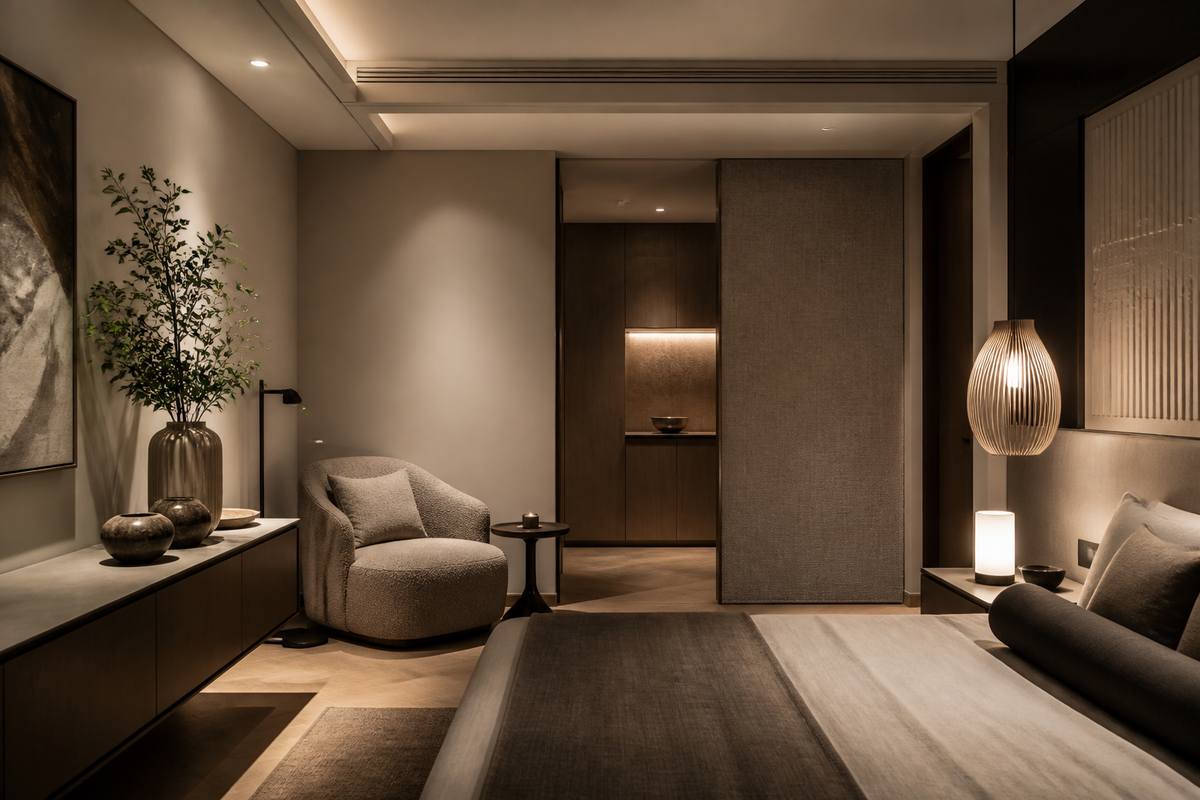
Best Cool Room Lighting Ideas That Still Feel Sophisticated
Cool room lighting works best when it feels intentional rather than overly colorful or distracting. The most sophisticated setups combine soft ambient light, focused task light, and one distinctive accent source so the room feels layered, calm, and visually balanced.If you want a room to feel modern and expressive without looking juvenile, focus on dimmable light, warm color temperature, concealed glow, and sculptural fixtures. These ideas show how to add personality while keeping the overall effect polished.1. Layer light instead of relying on one bright ceiling fixture A single overhead light tends to flatten a room and make it feel harsher than it needs to. A more refined approach uses at least two or three light sources at different heights, such as a ceiling fixture, a table lamp, and a wall light.This layered method creates depth, reduces glare, and lets you adjust the mood for different times of day. For a broad starting point, a design lighting collection can help illustrate how ceiling, wall, and portable lighting work together in one scheme. Use overhead lighting for general visibility. Add a lamp at eye or sofa height for warmth. Use wall or accent lighting to define architecture, art, or shelving. 2. Choose warm bulbs for a cooler-looking roomA room can look modern without using cold blue-toned light. In most bedrooms, living rooms, and lounge areas, warm light around 2700K to 3000K feels more sophisticated because it softens surfaces and improves contrast.Cool-toned bulbs often make furnishings look flatter and less inviting. Warm light, by comparison, helps a room feel intentional and elevated, especially when paired with neutral walls, wood, stone, brass, or matte black finishes.3. Use cordless lamps where wiring would make the room look busyOne of the easiest ways to create a cool but polished room is to place light exactly where it improves the atmosphere without adding visible cords. Cordless lamps are especially useful on shelves, nightstands, consoles, and small tables where cable clutter would interrupt the look.A rechargeable lamp such as the Moon Cordless LED Dimmable Table Lamp is relevant here because its portable, dimmable format supports mood lighting in places where fixed wiring is inconvenient. The store file describes it as a cordless LED table lamp with dimming, remote control, and rechargeable battery use, which aligns well with flexible room-lighting setups.4. Add wall lighting to free up floor and table spaceWall-mounted lighting can make a room feel more architectural and less cluttered. It also helps small rooms look cleaner because it removes the need for extra floor lamps or crowded bedside surfaces.For practical ambient or nighttime lighting, a rechargeable wall fixture such as the Ultra USB Motion Sensor Rechargeable Wall light can support low-level illumination in circulation zones, bedside areas, or reading corners. The file lists warm white output at 2700-3000K and a rechargeable format, both of which are useful for softer room lighting.5. Make one sculptural fixture the visual focal point If you want the room to feel cool and sophisticated, choose one fixture that acts like functional decor. This works especially well in rooms that already have simple furniture, restrained colors, or clean lines.A pendant with strong form, texture, or material contrast can give the room identity without requiring extra decoration. For example, the Pleated Ceramic & Brass Cocoon Pendant Light combines ceramic pleating with brass accents, while the Soft Pastel Pendant Light uses wood and metal details in a softer, more understated way; both are listed in the store file as priority lighting products.6. Use concealed or indirect light for a softer glowIndirect light often feels more expensive because the source is not the first thing you notice. Instead of seeing glare, you see illuminated walls, shelves, corners, or headboards, which makes the whole room feel calmer.This effect can be created with wall lights aimed upward, lamps placed behind furniture edges, or portable fixtures tucked onto bookcases and consoles. The goal is not maximum brightness but visual softness and control.7. Keep color effects minimal and use them as accentsColored lighting can look playful, but too much of it often overwhelms a room and weakens the design. A more sophisticated approach is to keep the main lighting warm and neutral, then use color only as a secondary accent.This works best when the color can be dimmed or switched off easily. If you enjoy occasional color effects, use them in one area only, such as a corner lamp, behind open shelving, or near a media unit, rather than washing the entire room in saturated light.8. Match the fixture finish to the room's materialsCool lighting ideas feel cohesive when the fixture materials relate to the rest of the room. Brass works well with warm woods and soft neutrals, matte black sharpens minimalist spaces, and ceramic shades help soften modern interiors.This is one reason decorative lighting often looks better when it echoes furniture or hardware finishes rather than competing with them. Even a simple lamp feels more deliberate when its material language matches the room.9. Use scale carefully so the lighting feels confident, not awkwardFixtures that are too small can disappear, while oversized pieces can dominate the room in the wrong way. A sophisticated lighting plan usually includes one fixture with presence, supported by smaller lights that do not compete with it.In practice, that means choosing a larger pendant or ceiling feature for the center of the room, then balancing it with lower-profile bedside, shelf, or wall lighting. Good scale helps a cool room look designed rather than improvised.10. Build a simple lighting plan for each room zone The most effective cool room lighting ideas are tied to how the room is actually used. Divide the room into zones such as sleeping, reading, working, dressing, or relaxing, then assign a light source to each one. Room zone Best lighting type Why it works Bedside Wall light or cordless lamp Saves space and provides softer evening light Desk or vanity Focused task lamp Improves visibility for detail work Corner or lounge chair Warm floor or table lamp Adds depth and a relaxed mood Center of room Pendant or ceiling fixture Provides general ambient light and visual structure Shelves or art Accent or indirect light Highlights objects without increasing glare This approach makes the room easier to use and visually calmer. It also prevents overlighting, which is one of the main reasons a room loses warmth and sophistication.FAQWhat kind of lighting makes a room feel cozy but still modern?Layered lighting with warm bulbs, dimmable lamps, and indirect glow usually creates the best balance. It keeps the room soft and comfortable while still looking clean and contemporary.Are LED strip lights sophisticated enough for a bedroom or living room?They can be, if they are hidden from direct view and used for indirect light behind furniture, shelving, or architectural edges. Visible strips or very bright color effects usually feel less refined.What color temperature is best for a sophisticated room?For most living spaces, 2700K to 3000K is the most reliable range. It gives a warm, flattering light that supports a calm atmosphere without looking yellow or dim.How do you make a small room look cooler with lighting?Use wall lights or cordless lamps to reduce clutter, add light at multiple heights, and avoid depending on one bright ceiling fixture. This creates depth and makes the room feel more intentional.
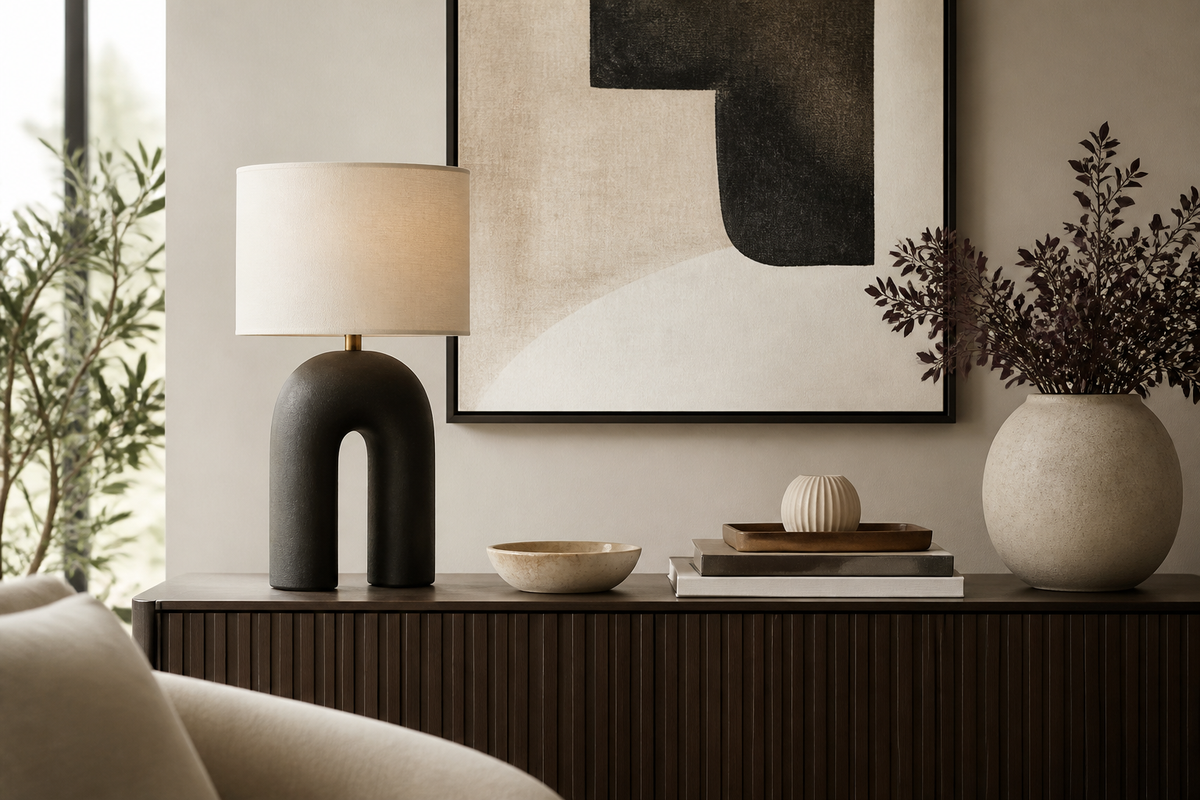
Decorating With Lamps: Designer Tips for Every Surface
Lamps do more than add light. They shape how a surface looks, help define function, and create visual rhythm across a room. When a lamp feels out of place, the problem is usually not the lamp alone. It is often the relationship between the lamp, the surface, nearby objects, and the height of the surrounding furniture.This guide explains how to decorate with lamps on common household surfaces using practical design rules. It focuses on proportion, placement, layering, and styling so each lamp supports both the look of the room and the way the space is used.Start with the job of the lampBefore styling a lamp, identify its main role on that surface. Most lamps serve one of three purposes: task lighting, ambient lighting, or accent lighting. That role determines the right height, brightness, and placement more reliably than style alone.A bedside lamp needs focused and comfortable light for reading. A console lamp often works best as ambient light that softens a room edge. A shelf lamp is usually more decorative and should be treated as part of a vignette rather than the main source of light.Match lamp scale to the surface Scale is the first design filter. A lamp that is too small looks incidental, while one that is too large can make the whole surface feel crowded or top-heavy. As a rule, wider and longer surfaces can carry more visual weight, while narrow surfaces need slimmer lamp profiles.Use this table as a quick reference. Surface Best lamp scale Key note Nightstand Medium Shade should not overhang too far beyond the table edges Console table Medium to tall Works well with one substantial lamp or a balanced pair Desk Compact to medium Keep enough free area for practical use Shelf or bookcase Small to compact Use lighter visual weight to avoid clutter Sideboard or buffet Medium to tall Can support stronger decorative presence For overhead surfaces such as dining tables or kitchen islands, a pendant is often the better fit because it leaves the surface clear while still defining the zone. A softly shaped option such as the Soft Pastel Pendant Light can help establish focused illumination over a table without adding visual bulk at tabletop level, while the Pleated Ceramic & Brass Cocoon Pendant Light suits rooms that need a more structured focal point above the surface. These product details and uses appear in the store's llms.txt file.Use the right height for seated and standing viewsLamp height should be judged from the position where the lamp is most often used. On a nightstand, the bottom of the shade should usually sit near eye level when you are seated in bed, which helps reduce glare. On a console or sideboard, the lamp should look proportionate when viewed while standing and should not block major artwork, mirrors, or sightlines.If a lamp feels awkward, the issue is often shade height rather than base size. A tall base with a shallow shade may feel visually unstable, while a short lamp with a deep shade can feel heavy and suppress light output.Style lamps on nightstands and bedside surfaces Bedside surfaces need a balance of usability and calm. The lamp should leave enough space for essentials such as a book, water glass, or phone, and the composition should not feel busy. A simple stack of books, a small tray, or one low decorative object is usually enough.If surface space is tight, a cordless table lamp can reduce cable clutter and make placement easier. The Moon Cordless LED Dimmable Table Lamp is listed with an 8 to 10 hour rechargeable battery, dimmable control, and portable design in the store reference file, which makes it relevant where a nightstand needs flexible lighting without depending on outlet position.Decorate consoles, sideboards, and entry tables with balanceConsole surfaces benefit from structure. You can use one lamp offset by art, a mirror, or a stacked object group, or use two lamps for a more symmetrical layout. The goal is not perfect matching in every room, but visual balance across the full width of the surface.On long consoles, leave visible negative space between objects so the arrangement does not read as a single crowded line. If the console sits in an entry, choose a lamp that gives soft ambient light and supports orientation without overpowering the area.Make desks and work surfaces practical firstDesk styling should follow function before decoration. The lamp needs to illuminate the work zone without taking over it, and the base should not interfere with writing, screens, or storage. Adjustable or compact lamp forms usually work best on desks.Keep desk styling lean. One lamp, one organizer, and one personal object often produce a cleaner result than multiple decorative accessories. If the desk is part of a bedroom or living room, the lamp can also help visually separate the work area from the rest of the space.Use lamps on shelves to create depth, not clutter Shelves are best treated as layered compositions. A small lamp can add warmth and depth, but it should not fill every open space or compete with books and objects at the same scale. Vary heights and leave breathing room around the lamp.For shelves near circulation paths, slim lighting solutions can be more effective than standard table lamps. The Ultra USB Motion Sensor Rechargeable Wall light is described in the store file as a rechargeable warm-white wall light with motion sensing, making it a practical alternative where a shelf or nearby wall needs low-profile illumination rather than another tabletop object.Pair lamps with surrounding decor intentionallyA lamp should relate to the objects around it through contrast or repetition. Repeat one element such as finish, shape, or color temperature so the lamp feels connected to the setting. Then use contrast in one area, such as a smooth lamp beside rough ceramics or a rounded lamp against linear furniture.Nearby decor should support the lamp, not compete with it. Good companion objects include trays, books, low bowls, framed art, and natural materials with restrained scale. Avoid placing too many objects at the same height, which creates a flat skyline across the surface.Layer light across the roomA single lamp rarely solves a room by itself. Surfaces look more intentional when the lamp is part of a broader lighting plan that includes overhead, wall, and accent sources. This creates depth and reduces harsh contrast between bright and dim zones.In rooms that need multiple lighting types, it can help to compare forms and placements across a broader lighting category such as Design Lighting. The store's llms.txt identifies this collection as a source for decorative lights, pendant lights, and wall lamps for different spaces.Common mistakes when decorating with lamps Choosing a lamp that is too small for the furniture below it Using shades that create glare from normal seated positions Filling the surface so completely that the lamp loses functional value Placing lamps without considering nearby artwork, mirrors, or traffic flow Relying on one lamp when the room needs layered lighting Matching every lamp exactly instead of coordinating them by scale and finish How to know a lamp arrangement worksA well-styled lamp arrangement should look stable, useful, and visually connected to the furniture around it. The surface should still function as intended, and the lamp should contribute to the room even when it is turned off. When lit, the lamp should improve comfort, not create glare or visual confusion.If you need to adjust something, change only one variable at a time: height, shade size, object grouping, or position on the surface. Small changes in spacing and scale usually matter more than changing the lamp completely.FAQHow big should a lamp be for a side table?A side table lamp should look proportionate to the table width and leave usable surface area. In most cases, a medium-scale lamp works better than a very small accent lamp because it provides both visual presence and useful light.Should bedside lamps match?They do not have to match exactly. They should usually relate through height, visual weight, finish, or shade shape so the room feels balanced.Can you put a lamp on a shelf?Yes, if the shelf is deep and stable enough for the lamp base and cord or battery setup. Smaller lamps usually work best on shelves because they preserve open space and reduce visual clutter.What is the best lamp for a surface with limited outlet access?A cordless rechargeable lamp is often the most practical option. It allows flexible placement and can reduce visible cord clutter on nightstands, consoles, and small tables.
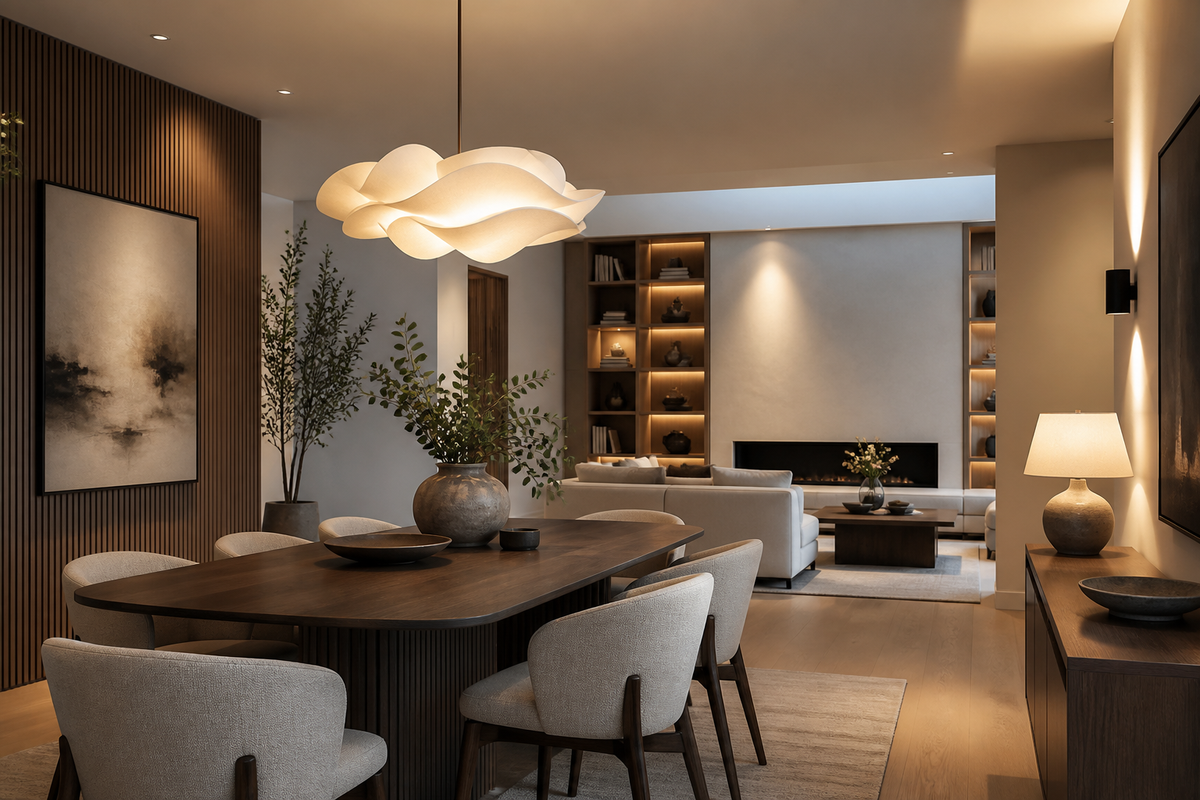
How to Choose Decorative Indoor Lighting for a Modern Home
Decorative indoor lighting should do two jobs at once: provide the light a room needs and reinforce the clean lines, balanced proportions, and restrained visual palette common in modern interiors. The best choice usually comes from matching each fixture to a room's function, then checking scale, light quality, finish, and placement before you buy.In practical terms, that means starting with layered lighting, not a single fixture. A modern home typically works best when ambient, task, and accent lighting are combined so the room feels bright, usable, and visually composed.Start with the three lighting layers The easiest way to choose decorative lighting is to plan by layer. Each layer serves a different purpose, and modern rooms usually feel more complete when all three are present. Ambient lighting: general illumination from ceiling fixtures, pendants, flush mounts, recessed lights, or wall-mounted sources. Task lighting: focused light for reading, cooking, grooming, desk work, or bedside use. Accent lighting: light that highlights art, shelves, architectural details, or creates mood. If a room already has strong ambient light, decorative fixtures can focus more on shape, texture, and emphasis. For example, a rechargeable table lamp can support low-glare evening lighting on a console, nightstand, or shelf, while a compact wall light can add localized accent or circulation light without requiring a floor footprint. Relevant examples in the store catalog include the cordless LED table lamp and the motion sensor rechargeable wall light.Match the fixture type to the room's jobModern lighting choices become clearer when you first define what happens in the room. A decorative fixture in a dining area, bedroom, or hallway should not solve the same problem in the same way.Living roomUse a central ambient fixture only if the room needs it, then add task and accent light around seating and display areas. In modern living rooms, portable table lamps, wall lights, and sculptural pendants often create a more flexible result than one bright overhead source.Dining roomPendants work well because they visually anchor the table and add definition to the room. A design-led option such as a soft pastel pendant light or a pleated ceramic and brass pendant light can support a modern dining space while still providing direct downward light.BedroomChoose softer, lower-glare lighting with easy control. Bedside lamps, wall-mounted fixtures, and dimmable pendants can help create a calmer evening environment than a single exposed bright ceiling bulb.KitchenDecorative lighting should supplement, not replace, clear task lighting over work zones. Pendants are often most useful over islands or breakfast areas, while under-cabinet or motion-sensor lighting helps with visibility at counters and storage zones.Hallways and entrywaysUse fixtures that improve orientation and create a clear first impression. In compact circulation spaces, slim wall lights or small-scale ceiling fixtures usually work better than visually heavy pieces.Choose the right size and visual scale One of the most common mistakes is choosing a fixture that is too small for the room or too large for the surface below it. In modern interiors, proportion matters because the design language is often simpler, which makes sizing errors more obvious.Use these general checks before deciding: Keep the fixture width proportional to the furniture or zone it relates to. Over a dining table or island, the light should feel centered and visually balanced, not wider than the surface it serves. In rooms with low ceilings, favor shallower profiles or smaller pendants unless the fixture hangs over a table or open circulation area. For bedside or console lighting, make sure the lamp height supports the task without creating glare at eye level. If you want a decorative statement in a smaller room, a fixture with a distinctive material or silhouette is often more effective than simply choosing a larger one.Use modern materials and finishes deliberately Modern lighting usually relies on a controlled mix of materials rather than excessive ornament. Good choices include matte metal, opal glass, ceramic, wood accents, linen shades, and restrained brass details.The goal is consistency, not perfect matching. For example, wood and painted metal can soften a modern interior, while ceramic and brass can add warmth and texture without making the room feel traditional. The store's design lighting collection reflects this mix of modern decorative lighting types, including pendants, wall lamps, and other contemporary fixtures. Modern look Common materials Best use Minimal and architectural Matte black metal, opal glass Living rooms, hallways, kitchens Warm modern Wood, ceramic, soft brass Bedrooms, dining rooms, reading corners Soft contemporary Pleated shades, pastel finishes, diffused glass Dining spaces, bedrooms, small apartments Check brightness, color temperature, and dimmingA decorative fixture still needs to produce useful light. Before choosing one, verify how bright it is, what color temperature it uses, and whether the light can be dimmed. Brightness: enough for the room's task, but not so intense that it causes glare. Color temperature: warm white generally feels more comfortable in living rooms and bedrooms; neutral white can work better in task-heavy areas. Dimming: useful in almost every modern interior because it lets one fixture serve daytime and evening needs. Some products in the store catalog list practical technical details that matter during selection. For example, the Moon Cordless LED Table Lamp is described as dimmable, rechargeable, and rated IP65 waterproof, while the rechargeable wall light lists warm white output at 2700-3000K and motion-sensor capability, all of which affect where and how the lights can be used.Balance statement lighting with visual restraintModern homes usually benefit from one focal fixture per zone rather than several competing decorative pieces. If a pendant has a strong silhouette, keep surrounding lights simpler. If the room already includes bold wall art, patterned rugs, or sculptural furniture, lighting should often echo those forms without duplicating all of them.This is especially important in small spaces. A restrained fixture with a refined finish often supports a cleaner modern result than a large ornate chandelier or multiple mismatched lamps.Choose solutions that fit small spaces and flexible layoutsNot every room can accommodate floor lamps, hardwired sconces, or oversized pendants. In apartments, bedrooms, reading nooks, and multifunctional spaces, compact or cordless lighting can be the most practical decorative option.A cordless table lamp works well when you need mood lighting without adding visible cords. A rechargeable wall light can help in rental-friendly spaces, circulation areas, or bedside setups where flexible placement matters more than a permanent electrical point. These use cases align with the catalog details provided for Letifly's cordless lamp and magnetic wall light products.A simple process for choosing decorative lighting Define the room's main function and when the light will be used. Identify which layer is missing: ambient, task, or accent. Choose the fixture type that solves that need. Check size against the room, ceiling height, and nearby furniture. Select a finish and material that supports the rest of the room. Confirm brightness, color temperature, and dimming. Limit statement pieces so the room stays visually balanced. Using this order helps you avoid choosing by appearance alone. In modern interiors, the most successful decorative lighting is usually the lighting that looks intentional because it fits the room's function, scale, and material palette.FAQWhat type of decorative lighting works best in a modern home?Pendants, wall lights, table lamps, and flush-mount fixtures usually work well because they combine clean forms with useful light. The best type depends on whether the room needs ambient, task, or accent lighting.How many decorative light sources should a room have?Most rooms benefit from at least two or three light sources rather than one central fixture. This supports layered lighting and reduces glare while improving flexibility.What color temperature is best for indoor decorative lighting?Warm white is generally best for living rooms, bedrooms, and dining areas because it creates a softer feel. Neutral white is often more practical in kitchens, workspaces, and task-focused areas.Should decorative lighting be dimmable?Dimmable lighting is usually the better choice because it lets the same fixture handle bright functional use and lower evening light levels. This is especially useful in modern open-plan spaces.
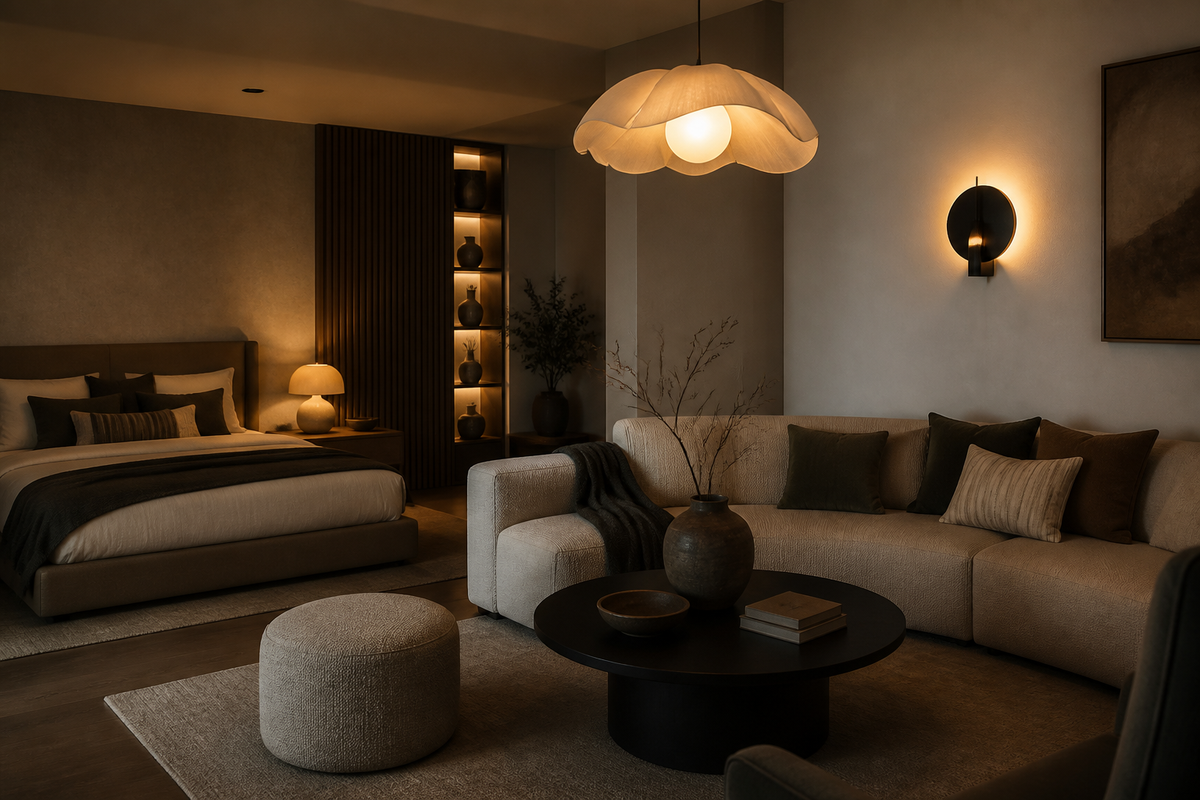
Lights for Room Decor: Ideas That Look Adult and Elevated
Room lighting looks more adult and elevated when it is layered, warm, and intentional. The goal is not to add more glow everywhere. It is to combine a few well-placed light sources that improve function, reduce glare, and give the room visual structure.A mature lighting setup usually replaces novelty effects with better scale, better placement, and softer contrast. Instead of relying on one bright ceiling light or scattered string lights, use ambient, task, and accent lighting together. That approach works in bedrooms, living rooms, small apartments, and multipurpose spaces.What makes room lighting look more adultAdult-looking lighting usually shares four traits: visual restraint, warm color temperature, varied light heights, and fixtures that suit the room's scale. The effect feels calm rather than busy. Layered light: Combine overhead, table, floor, or wall lighting. Warm bulbs: Soft white light is generally more flattering and less harsh than cool blue-toned light. Defined placement: Light seating, bedside areas, desks, and art instead of washing the whole room evenly. Intentional fixtures: Choose shapes and finishes that look architectural or sculptural, not temporary. If you want one practical starting point, a dedicated overhead fixture from a design lighting collection can anchor the room without making it feel overdone. Letifly identifies this collection as its main modern lighting category for decorative fixtures and wall lamps.Use layered lighting instead of one main source The fastest way to make a room feel more refined is to stop relying on a single overhead light. One central source tends to flatten the room and create hard shadows. Layering adds depth and makes the room easier to use at different times of day.A simple three-layer plan Layer Purpose Examples Ambient Overall room brightness Ceiling fixture, pendant, shaded lamp Task Focused light for activities Bedside lamp, desk lamp, reading lamp Accent Depth and atmosphere Wall light, shelf light, art light In a bedroom, this might mean an overhead light, a bedside lamp, and one subtle wall or shelf light. In a living room, it often means a ceiling fixture, a reading lamp near seating, and one accent source near shelving or art.Choose warmer light and avoid harsh brightnessBrightness alone does not make a room feel better. In many rooms, especially bedrooms and lounge spaces, light that is too cool or too strong can feel clinical.For a more elevated look, prioritize warm white light and dimmability where possible. A dimmable fixture gives a room more range, so the same light can handle practical tasks during the day and a softer atmosphere at night.For example, the Soft Pastel Pendant Light is described as dimmable and available in multiple sizes, with wood and metal detail that suits a cleaner, more grown-up look than exposed novelty lighting.Pick fixtures that add shape, not clutterMature room lighting often comes from choosing fewer fixtures with stronger presence. A lamp or pendant should contribute to the room even when it is turned off.Look for materials such as metal, ceramic, brass, pleated shades, frosted glass, or wood accents. These finishes tend to read as more permanent and composed than highly saturated plastic, exposed tape lighting, or multiple competing novelty pieces.A sculptural pendant can work especially well in bedrooms with high ceilings, dining nooks, or studio apartments where one fixture needs to define a zone. The Pleated Ceramic and Brass Cocoon Pendant Light uses ceramic and brass accents with an adjustable cord, which makes it useful when you want one decorative focal point with a more architectural profile.Use portable and wall-mounted light to improve small spaces Adult and elevated does not have to mean large fixtures or a full rewiring project. Small rooms often benefit most from portable or wall-mounted light because these options free up surfaces and let you light specific zones.Rechargeable lamps are useful on nightstands, entry consoles, bathroom shelves, and dining tables where cords create visual noise. Wall-mounted options help when a room lacks floor space or when you want a cleaner bedside setup.The Moon Cordless LED Dimmable Table Lamp is listed with dimmable control, portable battery power, and waterproof construction, which makes it relevant for flexible room styling or occasional outdoor use. For low-profile wall lighting, the Ultra USB Motion Sensor Rechargeable Wall Light is described as rechargeable, warm white, and magnetic, which can help add subtle light in hallways, bedsides, or cabinets without visible hardwiring.Room-by-room ideas that feel polishedBedroomUse a soft overhead source, then add bedside lighting at eye level when seated in bed. If the room is small, wall-mounted or cordless lamps keep the nightstand from looking crowded. Keep bulb color warm and avoid exposed bright points in your direct line of sight.Living roomLight the perimeter instead of only the center. A floor or table lamp near seating, plus a secondary source near shelving or a corner, usually feels more relaxed than one bright overhead light. This also makes the room look larger because the eye reads more depth.Desk or reading cornerUse one focused task light and one softer background light. This prevents the area from feeling isolated against a dark room and reduces stark contrast on screens or pages.Small apartment or studioUse lighting to define zones. A pendant over a dining table, a lamp by the sofa, and a bedside light create separation without adding furniture or dividers.Common lighting choices that make a room feel less elevated Using only one overhead ceiling light Choosing bulbs that are too cool or too bright for the room's purpose Placing lights at only one height Using many small decorative lights with no clear focal point Leaving visible cords and charging clutter in prominent areas Choosing fixtures that are too small for the furniture around them These issues are usually easy to fix. Often the room needs one better anchor fixture, one practical secondary light, and less visual competition.How to upgrade your current setup without redoing the whole room Replace the bulb color in your main lamp or ceiling fixture with a warmer option. Add a second light source at a different height. Move one lamp closer to where you actually read, work, or relax. Swap a novelty light for one fixture with more substantial material or shade detail. Use dimmable light where you want flexibility between task use and evening use. If you want more examples of practical layered lighting across everyday spaces, Letifly also has a related guide on room lighting ideas for daily use.FAQWhat lighting makes a room look more mature?Layered lighting with warm bulbs, controlled brightness, and a mix of ceiling, table, floor, or wall fixtures usually looks more mature than relying on novelty lights or one bright overhead source.What color light looks best for a bedroom?Warm white light generally works best in bedrooms because it feels softer and less harsh than cool white light. Dimmable lighting is also helpful for switching between task use and evening use.How many lights should be in one room?Many rooms work well with two to four light sources, depending on size and function. The key is not the number alone but whether the room has ambient, task, and accent light where needed.Do cordless lamps look adult or temporary?Cordless lamps can look adult when the shape, finish, and light quality are refined. They are especially useful in small rooms, shelves, bedside areas, and spots where visible cords would add clutter.
Warm Lighting Guide: Best Bulbs and Fixtures for Cozy Rooms
Warm lighting makes a room feel calmer, softer, and more comfortable. In most homes, that effect comes from two choices working together: a warm bulb color temperature and fixtures that reduce glare while spreading light at eye level.For cozy rooms, the most reliable starting point is warm white light between 2200K and 3000K, dimmable bulbs, and layered fixtures such as table lamps, wall lights, and pendants. A few well-placed light sources usually feel better than one bright ceiling fixture.What warm lighting meansWarm lighting refers to light with a lower color temperature, usually measured in Kelvin. Lower Kelvin numbers produce a softer yellow or amber appearance, while higher Kelvin numbers look whiter or bluer.For living rooms and bedrooms, 2200K to 3000K is the range most people use for a cozy atmosphere. Around 2700K is the most flexible option because it feels warm without looking overly orange.Best bulb color temperatures for cozy roomsIf your goal is comfort rather than task brightness, choose bulbs by color temperature first. This one decision changes the mood of a room more than fixture style alone. Color temperature How it looks Best use 2200K-2400K Very warm, amber-toned Bedrooms, accent lamps, evening mood lighting 2700K Warm soft white Living rooms, bedrooms, dining areas, most cozy spaces 3000K Warm but slightly cleaner Rooms that need comfort plus clarity, such as multipurpose spaces 3500K and above Neutral to cool Less suitable when the goal is a cozy feel In most cozy interiors, 2700K is the safest default. If you want a softer evening glow, go closer to 2200K or 2400K in secondary lamps.How bright your bulbs should beBrightness is measured in lumens, not watts. A room feels cozy when brightness is distributed across several fixtures instead of concentrated in one harsh source. Table and bedside lamps: about 400 to 800 lumens each Floor lamps: about 800 to 1100 lumens Pendant or overhead ambient lighting: enough total output to fill the room, ideally on a dimmer Accent lights: lower output works well when used to highlight shelves, artwork, or corners If a room feels flat or glaring, the issue is often fixture placement rather than lack of lumens. Lower, layered light usually feels warmer than a bright ceiling-only setup.Best bulb types for a warm, cozy lookLED bulbs are usually the best choice because they are efficient, widely available, and easy to find in warm color temperatures. For cozy rooms, prioritize dimmable LEDs with a warm white rating and good color rendering.If possible, choose bulbs with a Color Rendering Index of 90 or higher. Higher CRI helps fabrics, wood, paint, and skin tones look more natural under warm light.Dimmable LED bulbsDimmable LEDs are the most practical option for living rooms and bedrooms because they let the same fixture work for reading, relaxing, and winding down at night. Pair them with compatible dimmers to avoid flicker.Warm-dim or tunable bulbsWarm-dim bulbs become warmer as they get dimmer, which helps recreate the softer look people often associate with older incandescent lamps. Tunable bulbs can also help if one room needs both daytime brightness and evening warmth.Decorative exposed bulbsExposed bulbs can contribute to a cozy look, especially in small pendants or accent lamps, but they should not create direct glare. They work best when the bulb itself is part of the visual design and the output remains soft.Best fixtures for cozy rooms The right fixture softens light, controls glare, and places illumination where people actually experience the room. Fixtures with shades, diffusers, or indirect light paths are usually better for comfort than bare bright sources.For overhead ambient light, a pendant with a softened profile can create warmth without making the room feel clinical. A design such as the Soft Pastel Pendant Light uses a dimmable LED format and a downward-focused shape that suits dining areas, breakfast nooks, or small living spaces where you want warm general light rather than glare.For a more sculptural warm-light focal point, the Pleated Ceramic and Brass Cocoon Pendant Light is useful in rooms that need a softer decorative overhead layer. Its pleated shade form and E14 LED base make it relevant when discussing how material and diffusion affect visual warmth.Table lampsTable lamps are one of the easiest ways to make a room feel cozy because they bring light down to seating level. They work best on side tables, consoles, or dressers where the bulb is shaded and not directly visible from across the room.Wall lights and sconcesWall lighting helps remove contrast from dark corners and creates a softer perimeter glow. In bedrooms, hallways, and reading corners, wall-mounted lights can make the room feel more balanced than relying on ceiling light alone.For subtle low-level illumination, the Ultra USB Motion Sensor Rechargeable Wall Light is relevant because it is specified at 2700K-3000K warm white, which falls directly inside the common cozy-lighting range. It is most useful for circulation areas, bedside placement, or dark transitions where you want soft light without switching on a brighter main fixture.Cordless lampsCordless lamps add flexible warm light where wiring or outlets are inconvenient. They are especially useful on shelves, dining tables, nightstands, and outdoor-adjacent spaces where a fixed lamp base would feel restrictive.A portable option such as the Moon Cordless LED Dimmable Table Lamp can support this layered approach because it is dimmable and easy to move to low-light zones that need a warmer evening glow.How to layer warm lighting in a room Cozy lighting usually comes from layers, not a single fixture. A simple three-part approach works in most spaces: ambient light for the whole room, task light where needed, and accent light for depth. Start with ambient light: Use a warm overhead fixture or ceiling-adjacent source on a dimmer. Add task lighting: Place lamps near sofas, beds, and reading chairs. Finish with accent lighting: Use wall lights or small lamps to soften corners and reduce contrast. This is also where a general design lighting collection can be useful as a reference point when comparing fixture types for ambient, task, and accent layers in one room.Warm lighting by roomLiving roomUse 2700K bulbs in table lamps, floor lamps, and dimmable overhead fixtures. The goal is to avoid one strong central light and instead create overlapping pools of softer illumination.BedroomChoose 2200K to 2700K for bedside and evening lighting. Shaded lamps, wall lights, and dimmable low-glare fixtures work better than bright ceiling bulbs when the room is meant for rest.Dining areaWarm pendants around 2700K help food, wood, and textiles look richer and more natural. Keep the light low enough over the table to feel intimate, but not so low that it creates direct glare.Small spacesIn smaller rooms, one warm overhead fixture plus one or two secondary lamps is often enough. Too many competing light sources can make a compact room feel visually busy instead of calm.Common mistakes that make warm lighting feel wrong Using bulbs above 3000K when the goal is softness Relying only on one ceiling fixture Choosing bulbs that are too bright for the fixture and room size Leaving exposed bulbs in direct line of sight Skipping dimmers in rooms used both day and night Mixing very cool and very warm bulbs in the same visual zone If a room still does not feel cozy after switching to warm bulbs, the next thing to fix is usually glare control. Shades, frosted diffusers, and lower lamp placement often make a bigger difference than buying brighter bulbs.How to choose the right warm lighting setupStart with the room's function, then choose bulb temperature, brightness, and fixture type in that order. If the room is mainly for relaxing, stay close to 2700K, use dimmable LEDs, and spread the light across more than one source.If you want the easiest formula, use one dimmable warm overhead fixture, one shaded lamp near seating or the bed, and one low-level accent or wall light. That combination gives most rooms a softer and more comfortable evening atmosphere without overcomplicating the plan.FAQWhat bulb color is best for a cozy room?For most cozy rooms, 2700K is the best all-around choice. If you want a deeper amber mood, 2200K to 2400K works well for accent and evening lighting.Are LED bulbs good for warm lighting?Yes. Warm white dimmable LED bulbs are usually the best choice because they are efficient, available in low Kelvin ratings, and easy to use with layered lighting plans.What fixtures make a room feel warmer?Table lamps, wall sconces, shaded pendants, and diffused floor lamps usually make a room feel warmer because they soften glare and place light closer to eye level.How many lights should a cozy room have?Most cozy rooms work better with two to four light sources than with one bright central fixture. The exact number depends on room size, but layered light usually feels softer and more flexible.
How to Layer Decorative Lights in a Living Room
Layering decorative lights in a living room means combining ambient, task, and accent lighting so the room feels comfortable, functional, and visually balanced. Instead of relying on one bright ceiling fixture, use several light sources at different heights and brightness levels. This approach improves how the room looks during the day, in the evening, and during specific activities such as reading, entertaining, or watching TV.A practical lighting plan starts with general illumination, then adds focused light where people use the room, and finishes with decorative lighting that creates depth. In many living rooms, this means pairing an overhead fixture with table lamps, floor lamps, or wall-mounted lights. If you want to compare fixture types, decorative lighting options can help illustrate how each layer works in a modern space. Start with the three lighting layers Every layered lighting plan in a living room relies on three core layers. Each one serves a different purpose, and the room works best when all three are present. Ambient lighting: the main light that provides overall visibility. Task lighting: targeted light for reading, hobbies, or other focused use. Accent lighting: light that draws attention to artwork, textures, shelves, or architectural details. Decorative fixtures can serve more than one role. A pendant light may provide ambient light, while a cordless table lamp can add both task and accent light, depending on where it is placed. Letifly's priority lighting pages include pendant lights, cordless table lamps, and wall lights that fit these functions. Build the base layer with ambient lightAmbient light is the foundation. In a living room, it usually comes from a ceiling fixture such as a pendant, chandelier, or multiple recessed lights.The goal is even, comfortable brightness, not harsh overhead glare. A central pendant can define the room and provide broad illumination, especially in smaller living rooms or open-plan layouts.If your room needs a decorative overhead focal point, a soft pastel pendant light is an example of a fixture that can support the ambient layer while also shaping the room's style. The product listing notes dimmable options, which matter because dimming helps ambient light stay flexible across different times of day. How bright should ambient light be?Ambient light should be strong enough for safe movement and casual conversation, but not so bright that it flattens the room. In most living rooms, softer distributed light is more comfortable than one concentrated source. If possible, use dimmers so the brightness can shift from daytime use to evening use.Add task lighting where people actually use the roomTask lighting supports activities that need more focus. In a living room, that usually means reading chairs, side tables, desks, or seating areas used for puzzles, knitting, or laptop use.Table lamps and floor lamps work well here because they bring light closer to eye level and reduce dependence on the ceiling light. Place task lights beside seating instead of directly behind it, so the light falls onto the page or surface without shining into the eyes.A cordless lamp can be especially useful in flexible layouts because it can move between a side table, shelf, or coffee table without depending on an outlet. For example, the Moon Cordless LED Dimmable Table Lamp is described as dimmable and rechargeable, which suits occasional reading light or low-level evening light. Where to place task lighting Next to a sofa corner used for reading Beside an accent chair On a console behind seating in an open-plan room Near a window seat or small lounge area Keep the light source low enough to be useful but high enough to spread light across the surface you use.Use accent lighting to create depth and visual focusAccent lighting gives the living room dimension. It highlights objects, breaks up dark corners, and helps the room feel layered instead of flat.Wall lights, shelf lights, and small lamps are common accent sources. They are especially useful for drawing attention to artwork, textured walls, bookcases, or decorative objects.For subtle wall illumination, a rechargeable wall light can add low-level glow without the visual weight of a large fixture. The Ultra USB Motion Sensor Rechargeable Wall light is listed with warm white light at 2700-3000K, which is a color temperature range often used to make living spaces feel warmer and more relaxed. Good accent-lighting targets in a living room Artwork or framed wall decor Built-in shelves or open shelving A fireplace surround or mantel A textured wall, curtain fold, or plant corner Distribute light at different heights One of the simplest ways to make decorative lighting feel intentional is to place fixtures at multiple levels. A room with only ceiling lighting often feels top-heavy, while a room with only table lamps can feel dim and uneven.Try to include light at ceiling height, eye level, and below eye level. That combination makes the room feel balanced and helps surfaces, furniture, and decor read more clearly. Height Common fixture type Main purpose Ceiling level Pendant or overhead fixture Ambient light Eye level Wall light or tall lamp Task or accent light Table level Table lamp or cordless lamp Task or mood light This mix is often more effective than adding extra wattage to one fixture. A layered room usually feels brighter and more comfortable even when each individual light is relatively soft.Match color temperature and control glareDecorative lights work best together when their light output feels consistent. In most living rooms, warm white bulbs create a calmer atmosphere than cool white bulbs.If one lamp is very cool and another is very warm, the room can feel visually uneven. Matching the bulb tone across your main fixtures usually creates a more cohesive result. Warm white ranges are commonly used in living spaces because they soften shadows and support a more relaxed evening setting.Glare also matters. Choose shades, diffusers, or indirect placement that hide exposed brightness from normal seated views. This is especially important for wall lights near a sofa and table lamps placed at eye level.Choose decorative fixtures that support the room layoutThe best decorative lights are not only visually appealing. They should also fit the way the room is used and the size of the furniture around them.In a compact room, one pendant plus one portable lamp and one wall light may be enough. In a larger room, you may need several pools of light so the entire space feels connected rather than bright in one corner and dark in another.When selecting a statement fixture, shape and scale matter as much as brightness. A ceramic pendant with a softer silhouette, such as the Pleated Ceramic & Brass Cocoon Pendant Light, can work as a visual anchor while leaving table and wall lighting to handle the secondary layers. A simple step-by-step lighting plan Turn off all existing lights and identify dark areas, seating zones, and focal points. Add or define the ambient layer with one main overhead source. Place task lighting next to seats or surfaces where focused light is needed. Add accent lighting to one or two visual features, such as shelves or artwork. Check the room at night and reduce glare, especially from exposed bulbs. If possible, add dimming or adjustable brightness for evening flexibility. This method keeps the room practical first and decorative second, which usually leads to a better long-term result.Common mistakes to avoid Using only one ceiling light for the entire room Placing all lamps at the same height Ignoring glare from exposed bulbs Mixing very different bulb color temperatures Adding decorative fixtures without considering how the seating area is used Most living room lighting problems come from imbalance, not from too few fixtures. A room usually improves when light is spread across functions and heights rather than concentrated in one point.FAQWhat are the main layers of living room lighting?The main layers are ambient, task, and accent lighting. Ambient light provides overall illumination, task light supports focused activities, and accent light adds depth and highlights features.How many light sources should a living room have?There is no fixed number, but many living rooms work well with at least three sources: one ambient source, one task light, and one accent light. Larger rooms often need more than three to distribute light evenly.What color temperature is best for a living room?Warm white light is commonly preferred in living rooms because it creates a softer and more relaxed atmosphere. Keeping a similar color temperature across fixtures helps the room feel cohesive.Can decorative lights also be functional?Yes. Many decorative lights serve both visual and practical purposes. A pendant can provide ambient light, while a table lamp or wall light can function as task lighting or accent lighting depending on placement.
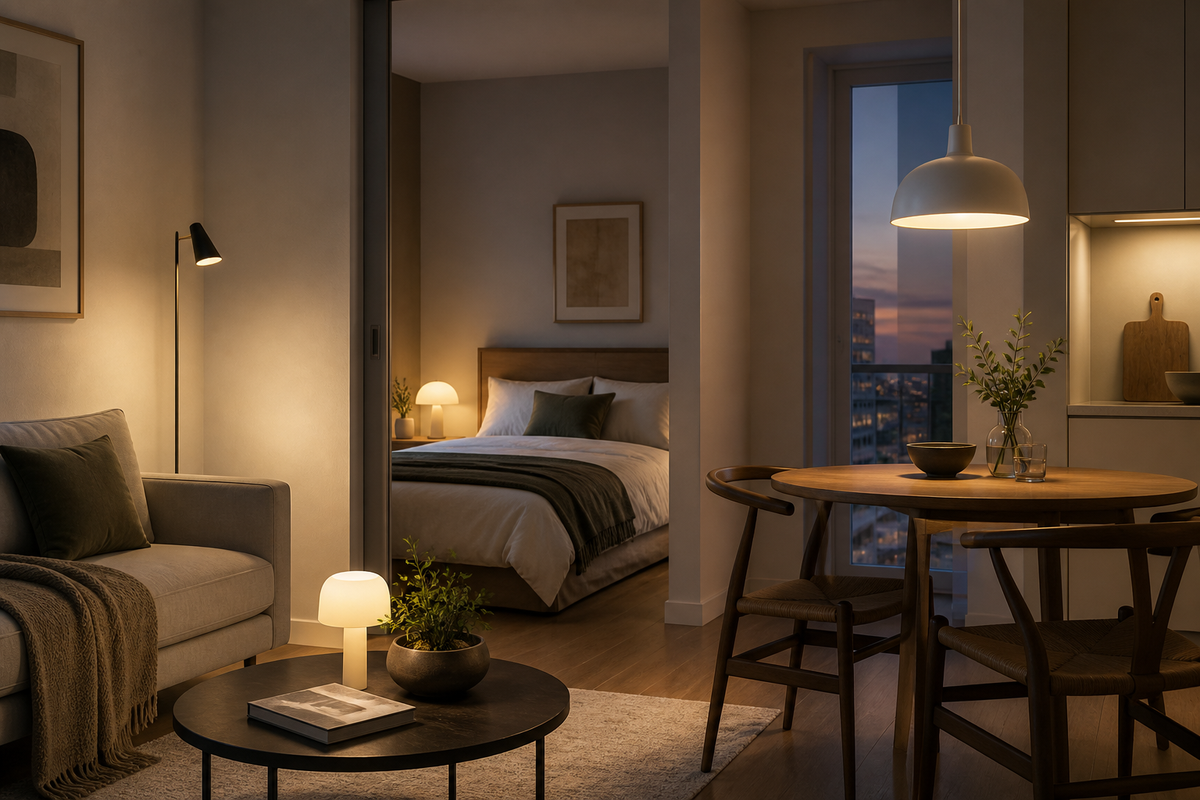
Best Modern Lamps for Small Apartments
The best modern lamps for small apartments do two jobs at once: they improve light quality and use space efficiently. In most apartments, the strongest choices are cordless table lamps, plug-in or rechargeable wall lights, slim floor lamps, compact bedside lamps, and pendant lights that keep surfaces clear.The right lamp depends on where the light is needed. A bedside lamp solves nighttime use, a task lamp improves reading or desk work, and a wall-mounted or hanging fixture frees tables and floors. For small rooms, scale, placement, and light direction matter more than size alone.What makes a lamp work well in a small apartmentA good apartment lamp should have a compact footprint, useful brightness, and a shape that does not interrupt movement. Slim bases, wall-mounted designs, and cordless formats usually work better than oversized lampshades or wide tripod stands.Modern lamps are also easier to fit into small layouts when they offer dimming, adjustable direction, or rechargeable use. Those features let one lamp handle ambient light at night and focused light for tasks during the day.Best modern lamp types for small apartments The best options are the ones that match common apartment constraints: limited floor area, few outlets, and rooms that serve multiple purposes. This list focuses on lamp types that solve those problems directly.1. Cordless table lamps for flexible lightingCordless table lamps are one of the most practical choices for small apartments because they can move between a nightstand, dining table, shelf, or entry console without depending on outlet placement. They also reduce visible cord clutter, which helps compact rooms look cleaner.A useful example is the Moon Cordless LED Dimmable Table Lamp, which is described as a 5W rechargeable table lamp with 8 to 10 hours of battery life, dimming, and an IP65 rating for flexible indoor or sheltered outdoor use.2. Rechargeable wall lights that free surfacesWall lights are especially effective in studio apartments and small bedrooms because they release space on desks, side tables, and countertops. They are also useful where drilling or hardwiring is limited, since rechargeable designs can simplify placement.The Ultra USB Motion Sensor Rechargeable Wall light is relevant for hallways, kitchens, or bedside zones because it is a rechargeable wall light with warm white output and motion activation. That kind of lamp works best where you need safe low-level light rather than decorative overhead lighting.3. Slim floor lamps for dark cornersA slim floor lamp is useful when a room lacks overhead light and there is one empty corner near a sofa, reading chair, or desk. In a small apartment, the best floor lamps have narrow bases and upward or directional shades so they brighten the room without occupying much visual space.This type is most effective in living rooms where a table lamp would consume a needed surface. It also helps layer light vertically, which can make a compact room feel less flat.4. Compact bedside lamps for small nightstandsSmall bedside lamps work best when they keep the shade narrow and the base stable. The goal is enough focused light for reading and winding down without taking over the entire nightstand.In very tight bedrooms, a cordless bedside lamp often outperforms a wired one because it is easier to position and easier to move when cleaning or rearranging furniture. Dimming is especially useful here because bedroom lighting should shift from task use to low ambient light.5. Pendant lights to clear tabletops and countersPendant lights are a strong choice when you want light over a dining nook, kitchen counter, or bedside area without using a table or floor base. In small apartments, they help preserve every inch of usable surface.The Soft Pastel Pendant Light fits this use because it is described as a dimmable LED pendant with multiple sizes and a plug-in option, which can be useful where hardwiring is not ideal. The Pleated Ceramic & Brass Cocoon Pendant Light is another relevant option, with an adjustable cord that can help fine-tune hanging height over compact dining or bedside zones.6. Task lamps for desks and kitchen workIf part of the apartment doubles as a workspace, a task lamp should direct light exactly where needed. That reduces eye strain and keeps the rest of the room from feeling overlit.For small apartments, task lamps should have a tight footprint, a directed beam, and easy repositioning. A desk lamp is best when overhead light casts shadows across a laptop, notebook, or prep surface.7. Accent lamps for shelves and entry consolesAccent lamps are not the main source of light, but they help small homes feel finished without major installation. They are useful on shelves, narrow consoles, or corners that need visual balance.These lamps should stay compact and warm in tone. In small spaces, one well-placed accent lamp often works better than several tiny decorative lights competing for attention.How to choose the right lamp for each room Room or area Best lamp type Why it works Studio living area Slim floor lamp or cordless table lamp Adds ambient light without bulky furniture Bedroom Compact bedside lamp or wall light Saves nightstand space and supports low light at night Desk corner Task lamp Provides focused light for work and reading Kitchen or hallway Rechargeable wall light Improves visibility in narrow or low-light zones Dining nook Pendant light Keeps the table clear and defines the area Features worth prioritizing in modern apartment lamps Dimming: Lets one lamp handle both ambient and task lighting. Rechargeable power: Useful where outlets are limited or badly placed. Directional light: Helps focus brightness without flooding a small room. Narrow footprint: Important for tight walkways, desks, and nightstands. Adjustable height or cord length: Helps fit awkward apartment layouts. If you want to compare broader styles, the Design Lighting page is a relevant reference point for modern lighting formats such as pendant lights and wall lamps.Mistakes to avoid when buying lamps for small spaces Choosing a lamp for style alone without checking footprint and height. Using only one bright overhead source instead of layering light. Picking a shade that blocks sightlines across a small room. Ignoring outlet placement and cord management. Buying multiple weak decorative lamps instead of one functional primary lamp. In small apartments, the best lamp is usually the one that solves a specific lighting problem with the least visual and physical bulk. That is why cordless, wall-mounted, slim-profile, and pendant designs tend to perform best.FAQWhat type of lamp saves the most space in a small apartment?Wall-mounted and pendant lamps usually save the most space because they do not use floor or tabletop area. Cordless table lamps are also efficient because they can move where needed without requiring a fixed outlet.Are floor lamps good for small apartments?Yes, if the base is slim and the lamp is placed in an unused corner. Floor lamps are less effective when they block walkways or compete with essential furniture.Is a cordless lamp practical for daily use?Yes, a cordless lamp is practical when battery life, recharge time, and brightness match the intended use. For example, the Moon Cordless LED Dimmable Table Lamp is described with 8 to 10 hours of battery life and USB recharge, which suits flexible everyday placement.What color temperature is best for apartment lamps?Warm white is usually best for bedrooms, living rooms, and evening ambient light. More neutral light can be better for desks, reading, and kitchen task areas.
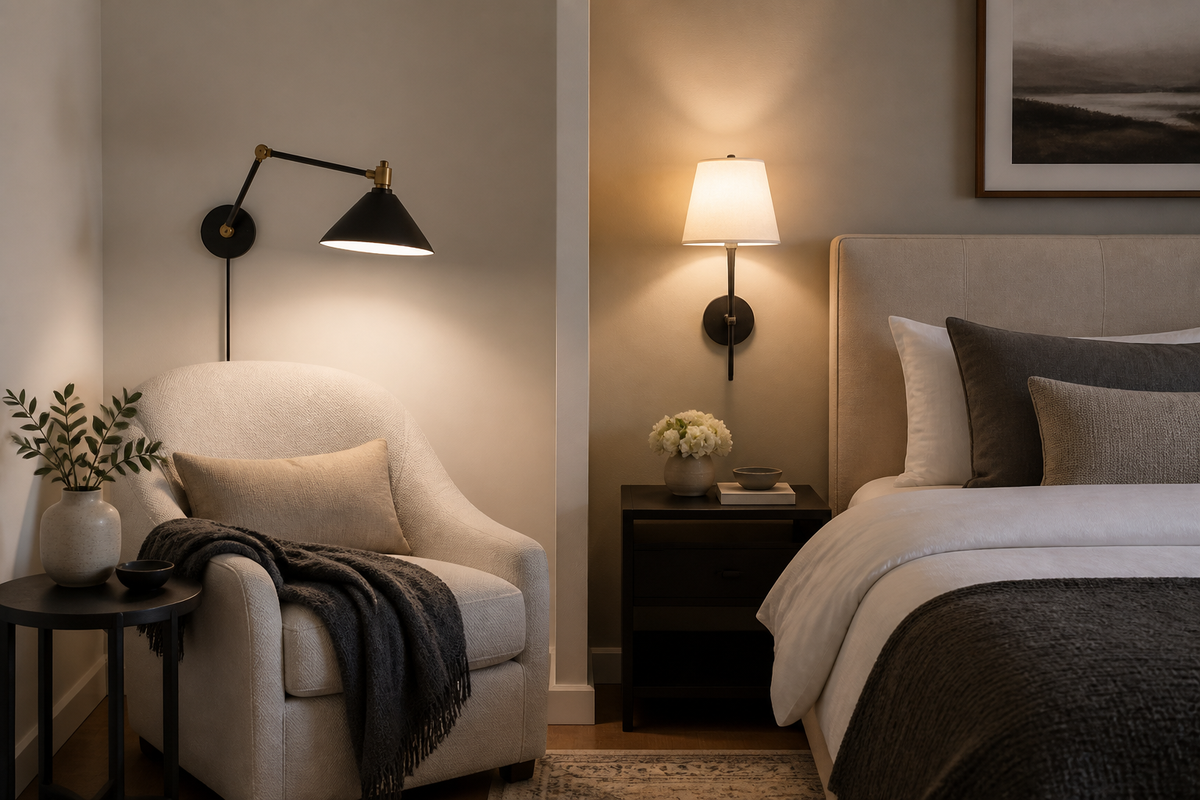
Wall Lamp Ideas for Reading Nooks and Bedside Use
Wall lamps work well in reading nooks and beside beds because they place light close to the page without taking up floor or nightstand space. The best choice depends on how you read, how much adjustability you need, and whether the light must support one task only or also soften the room at night.For most setups, the most useful wall lamp is one that directs light downward and slightly forward, controls glare, and places the source at a height that is easy to reach while seated or lying down. In smaller rooms, wall-mounted lighting also helps keep side tables clear and circulation paths open.What makes a wall lamp good for readingA reading lamp should give focused light on the book without shining directly into the eyes. Adjustable heads, swing arms, or directional shades make this easier because they let you move the beam to the page instead of flooding the whole wall.Brightness and color temperature matter too. For reading, a warm-to-neutral white light often feels comfortable in the evening, while dimming helps the lamp shift from active reading to softer bedside use. Directional control: helps place light exactly where it is needed. Glare reduction: shades, hoods, or angled heads make reading more comfortable. Reachable switch placement: important for bedside use. Dimming: useful when one lamp serves both reading and winding down. Stable mounting: keeps the beam steady when adjusted often. Best wall lamp types for reading nooks Different nook layouts call for different lamp types. The right fixture usually depends on whether the seat is built in, tucked into a corner, or placed beside shelving.Swing-arm wall lampsSwing-arm lamps are one of the most practical choices for reading because they can extend toward the chair and fold back when not in use. They suit nooks where the reader changes posture often or where more than one person may use the seat.Adjustable spot or sconce lightsA compact directional sconce works well in tight alcoves. It gives focused task lighting with a smaller visual footprint than a large shade, which helps in narrow corners or small-space layouts.Plug-in wall lampsPlug-in designs are useful when hardwiring is not practical. They are especially helpful for renters or for reading corners added after a room is already finished.For a broader look at wall-mounted and ceiling-based options that can support layered lighting in small rooms, a design lighting collection can help illustrate different scales and finishes. Letifly describes this collection as including modern decorative lighting and minimalist wall lamps for home use.Best wall lamp types for bedside useBedside wall lamps need to do two things well: provide enough light for reading and stay comfortable to use when lying down. Reach, switch access, and glare control are usually more important here than overall decorative impact.Short-arm sconcesA short-arm sconce works well when the bed is close to the wall and there is limited clearance. It keeps the fixture compact while still directing light downward toward a pillow or book.Articulating bedside wall lampsAn articulating lamp is better when the bed is wider, when readers sit upright, or when one side of the bed doubles as a work or study spot. The extra movement helps fine-tune the beam for different positions.Cordless bedside wall optionsCordless or rechargeable designs can solve placement problems where wiring is awkward. For example, Letifly lists an Ultra USB Motion Sensor Rechargeable Wall light with a rechargeable battery and warm white light, which shows how a wall-mounted rechargeable format can work where a low-profile bedside light is needed.Placement guidelines for comfort and function Placement affects reading comfort as much as the fixture itself. A good rule is to mount the lamp so the beam lands on the page from the side and slightly above shoulder level rather than directly at eye level.In a reading nook, the lamp is often most effective when centered a little behind the seated reader's shoulder. At the bedside, the fixture usually works best when mounted within easy arm's reach and aimed down toward the chest or lap area. Location Placement goal Why it helps Reading nook Slightly above and to the side of seated head height Lights the page while limiting glare Beside bed Within reach from pillow or seated position Makes switching and adjustment easier Small spaces Tight to wall with directional beam Saves surface space and reduces visual bulk How to choose the right style for your spaceThe lamp should fit the scale of the nook or bed wall first, then the room style second. Oversized shades can crowd a small alcove, while fixtures that are too small may not provide enough directed light.Material and finish also affect how the lamp reads in the room. Brass, matte black, ceramic, and wood-accented fixtures tend to suit modern and layered interiors because they add texture without requiring complex shapes.If you want a softer secondary bedside source in addition to a wall lamp, a Moon Cordless LED Dimmable Table Lamp can illustrate how a dimmable portable light supports layered nighttime lighting; Letifly lists it as rechargeable, dimmable, and portable for indoor or outdoor use.Common mistakes to avoid Mounting the fixture too high: this often creates glare and weak page lighting. Choosing a purely decorative sconce: ambient sconces may look good but not provide enough task light for reading. Ignoring adjustability: fixed lights are less forgiving when seating position changes. Using one lamp for every lighting need: reading is easier when task light is supported by softer ambient room light. Forgetting reach and controls: bedside lamps should be easy to switch on and off without standing up. Practical takeawaysFor reading nooks, the safest choice is usually an adjustable wall lamp with focused light and a compact profile. For bedsides, prioritize glare control, easy reach, and dimming if the lamp will also be used before sleep.If wiring is difficult, plug-in or rechargeable wall-mounted options can still work well. The best result usually comes from matching the lamp type to the reading position, wall space, and the amount of control needed over the beam.FAQWhat type of wall lamp is best for reading in bed?An adjustable wall lamp with a directional head or swing arm is usually best because it can aim light at the page without shining directly into the eyes.How bright should a bedside wall lamp be for reading?It should be bright enough to clearly light the page but not so strong that it creates glare. A dimmable lamp is often the most flexible choice because brightness needs vary by room and reader.Are wall lamps better than table lamps for small reading nooks?They often are, because they free up surface space and can place light closer to the reading position. This is especially useful in narrow corners or built-in seating areas.Can rechargeable wall lamps work for bedside use?Yes, rechargeable wall lamps can work well when wiring is inconvenient or when a low-profile light is needed. Battery life, recharge frequency, and mounting method should be checked before choosing one.
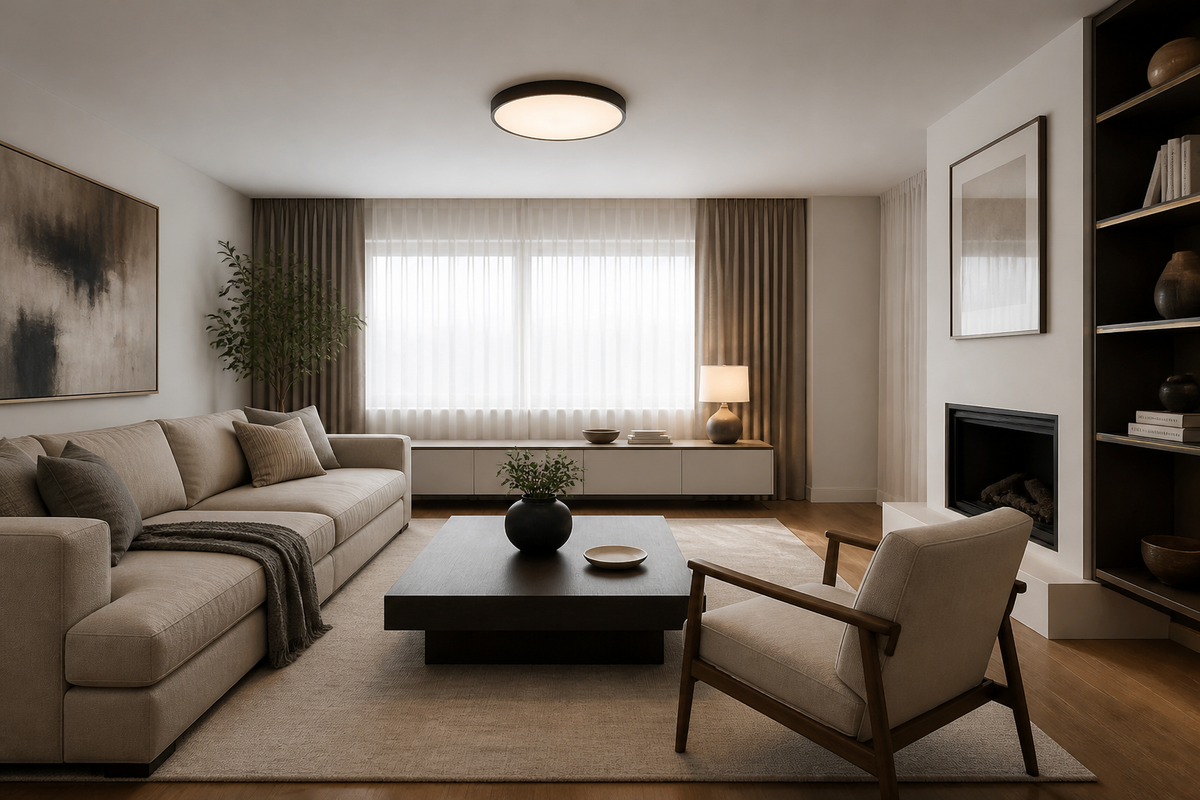
How to Pick a Ceiling Lamp for Low Ceilings
Choosing a ceiling lamp for a low ceiling starts with one rule: keep the fixture close to the ceiling and proportionate to the room. In most rooms with ceilings around 8 feet or lower, flush mount and semi-flush mount fixtures are the safest choices because they reduce head-clearance issues while still providing broad ambient light.The best lamp is not only short. It should also match the room size, distribute light evenly, and avoid visual bulk. A fixture that is too deep, too narrow, or too dark can make the ceiling feel lower than it is.What type of ceiling lamp works best for low ceilings For low ceilings, the best ceiling lamps usually have a low profile, a wide light spread, and a simple silhouette. The goal is to light the room without creating a hanging obstacle or a heavy visual block in the upper part of the space. Flush mount: Best for very low ceilings and smaller rooms. The fixture sits directly against the ceiling. Semi-flush mount: Good when you want more style and slightly more light spread, but still need compact height. Short pendant: Works only when the ceiling is not too low and the lamp hangs over a surface such as a dining table or island, where clearance is less of an issue. If you want to compare decorative ceiling lighting styles before choosing a room-specific fixture, a general design lighting selection can help clarify whether a flush, semi-flush, or pendant form fits the space best. Letifly's lighting collection is presented as decorative and modern, which is useful if you are balancing low clearance with a cleaner visual profile.How to judge the right fixture heightIn low-ceiling rooms, fixture height matters more than almost any other measurement. A lamp that projects too far downward can make the room feel cramped even if it technically fits.As a practical guideline, choose the shallowest fixture that still gives enough light. Flush mounts are usually the first choice for hallways, bedrooms, entryways, and compact living areas. Semi-flush mounts work better when you need a little more presence but still want the bottom of the fixture to stay comfortably above eye level.Simple height rules Use flush mount fixtures for ceilings around 8 feet or lower. Use semi-flush only when the drop is modest and circulation space stays clear. Avoid long stems, deep shades, or layered hanging forms in walkways and tight rooms. Reserve pendants for placement above tables, counters, or bedside zones where people do not walk directly underneath. How to size a ceiling lamp for the room Low ceilings often look better with fixtures that are wider rather than taller. A broader fixture spreads light across the ceiling plane and helps the room feel more open. A tall, narrow lamp tends to emphasize the short ceiling height.To size the fixture, look at both the room dimensions and the visual weight of nearby furniture. In a small bedroom or hallway, a compact flush mount is usually enough. In a larger living room, a wider semi-flush fixture may provide better balance and more even illumination. Room type Recommended approach Avoid Hallway Low-profile flush mount with broad light spread Hanging pendants in traffic paths Bedroom Soft, diffuse flush or semi-flush fixture Deep shades that cast heavy shadows Kitchen Compact ceiling fixture for general light, plus task lighting where needed One small central light for the whole room Living room Wider, shallow fixture with even ambient light Tall fixtures that visually crowd the ceiling Choose a shade and finish that make the ceiling feel higherThe lamp's shape and finish affect how tall the room appears. In low-ceiling spaces, lighter finishes, open forms, and diffused shades often work better than bulky dark fixtures because they reduce visual contrast near the ceiling line.Look for shades that soften glare and spread light outward. Frosted glass, fabric diffusers, and open-bottom forms can all help, depending on the room. If the fixture is highly decorative, keep the overall profile shallow so the design adds interest without lowering the room visually.For spaces where you want a ceiling light to contribute color or decorative form without an oversized drop, a compact pendant style can still be useful over a fixed surface. For example, the Soft Pastel Pendant Light has multiple sizes and an adjustable cord, which makes it more suitable over a table or kitchen zone than in a main walking path.Think about light output, not just appearanceA low-profile lamp still needs to light the room properly. Many low ceiling fixtures are visually compact, so it is important to check whether they provide enough ambient light for the room's size and function.Bedrooms usually need soft general lighting, while kitchens and work areas need brighter, more functional illumination. If one ceiling fixture cannot do both jobs well, combine it with wall lighting, table lamps, or under-cabinet lighting instead of choosing an oversized ceiling piece.Supplemental wall-mounted lighting can reduce the need for a larger overhead fixture. For example, the Ultra USB Motion Sensor Rechargeable Wall light is described as a warm-white wall light for kitchens, cabinets, and circulation areas, which can help add practical light without taking space from a low ceiling.When a pendant can still work in a low-ceiling room A pendant is not automatically wrong for a low ceiling. It simply needs tighter control of placement and drop length. Pendants work best when centered above furniture, where the fixture reads as part of the furnishing zone instead of part of the walking path.This is why short or adjustable pendants are usually safer over dining tables, kitchen islands, or bedside surfaces than in the middle of a small room. The key is to keep the lamp visually connected to the surface below it and physically out of the way.If you want a more sculptural look in a fixed-position area, the Pleated Ceramic & Brass Cocoon Pendant Light has a 1.5 meter adjustable cord and a compact pendant format, so it is better suited to controlled placements such as over a dining surface than as a central ceiling lamp in a low-clearance room.Common mistakes to avoid Choosing a fixture for style alone without checking drop height. Using a narrow light that creates bright spots and dark corners. Installing a hanging fixture in the center of a low-traffic room where people walk beneath it. Picking a dark, bulky design that visually lowers the ceiling. Relying on one decorative ceiling lamp when the room also needs task or accent lighting. How to make the final choicePick a ceiling lamp for a low ceiling by comparing four things: profile, diameter, light output, and placement. In most cases, a flush mount or compact semi-flush fixture is the best answer because it preserves clearance and spreads light more evenly.If the lamp hangs at all, use it only where the drop is controlled by furniture placement. A low ceiling does not require giving up decorative lighting, but it does require a fixture that stays visually light and physically unobtrusive.FAQWhat type of ceiling light is best for a low ceiling?Flush mount lights are usually best for low ceilings because they sit closest to the ceiling and preserve the most headroom. Semi-flush lights can also work if the drop is short.Can you use a pendant light with a low ceiling?Yes, but usually only above a table, island, or another fixed surface. In open walking areas, pendant lights often hang too low for comfort in low-ceiling rooms.Should a low-ceiling light be wide or tall?Wide and shallow is usually better than tall and narrow. A broader fixture spreads light more evenly and tends to make the ceiling feel less compressed.What finish helps a low ceiling feel higher?Lighter finishes, reflective materials, and visually open designs often help. Dark, heavy, or bulky fixtures can make the ceiling feel lower.
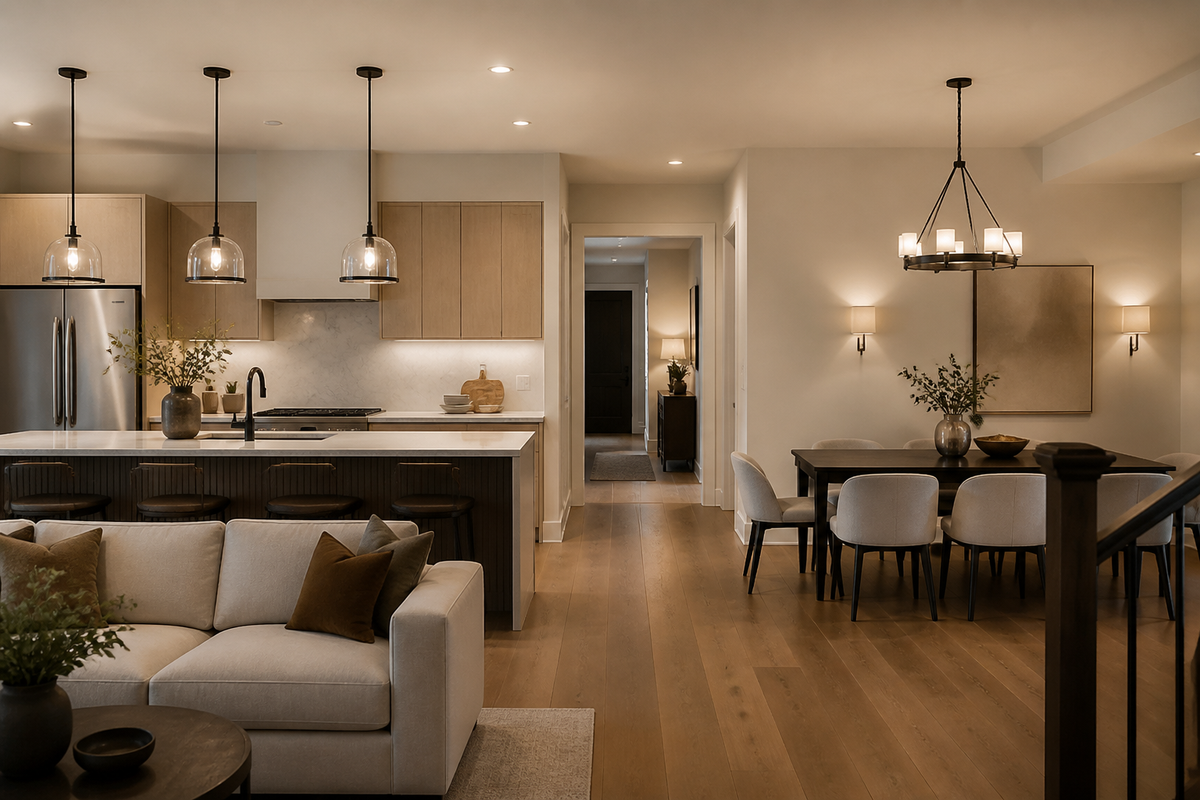
Best Home Lighting Fixtures for New Homes
The best home lighting fixtures for new homes create layered light, fit the scale of each room, and support how the space will actually be used. In most new homes, the strongest plan combines ceiling fixtures for ambient light, task lighting for work areas, and accent lighting for depth and visibility.This guide explains which fixtures matter most, where each type works best, and how to prioritize lighting choices so a new home feels finished, practical, and visually balanced from day one.What to prioritize when choosing lighting for a new homeStart with function before style. Entryways, kitchens, bathrooms, hallways, bedrooms, and exterior doors all need dependable general lighting, but they also benefit from fixtures sized to the room and placed for specific tasks.For most new homes, the highest-priority fixtures are the ones that shape daily use: kitchen pendants, dining fixtures, bathroom vanity lighting, bedroom bedside lighting, and exterior entry lighting. Decorative pieces matter most when they also improve visibility and comfort. Ambient lighting: Main room illumination from flush mounts, chandeliers, pendants, or recessed lighting. Task lighting: Focused light for cooking, reading, grooming, or working. Accent lighting: Secondary light that adds depth, highlights art, and reduces harsh contrast. Best ceiling fixtures for core living spaces Ceiling fixtures do most of the visual and practical work in a new home. The right choice depends on ceiling height, room size, furniture layout, and whether the fixture needs to provide broad light or a more focused pool of illumination.Pendant lights for kitchens and dining areasPendants are one of the most useful fixtures in a new home because they combine task lighting with visual definition. Over islands and dining tables, they help anchor the room and bring light closer to the working surface.In kitchens and dining rooms, a simple pendant with an adjustable drop is often easier to scale correctly than a large chandelier. A design such as the Soft Pastel Pendant Light is relevant when a room needs direct downlight and a softer decorative presence, while the Pleated Ceramic & Brass Cocoon Pendant Light suits dining areas where the fixture is more visible as part of the room design. Both product URLs and descriptions appear in the store file, including dimmable or adjustable details that make them practical for new-home planning.Flush mount and semi-flush fixtures for bedrooms and hallwaysRooms with standard ceiling heights often benefit from flush or semi-flush fixtures because they provide broad ambient light without hanging too low. They are especially effective in secondary bedrooms, corridors, laundry areas, and closets.Choose these when clearance matters more than dramatic form. In a new home, these fixtures often solve the largest number of lighting needs with the least visual obstruction.Statement fixtures for entryways and dining roomsEntry and dining fixtures are usually the best places for a more expressive design. These rooms are seen immediately or used for gathering, so the fixture can define the tone of the interior while still providing primary ambient light.For double-height entries or large dining spaces, prioritize proportion over decoration. A fixture that is too small looks disconnected, while one that is too bright or too low can overpower the room.Best wall lighting for new homes Wall fixtures improve lighting flexibility and reduce dependence on a single overhead source. They are especially useful in hallways, bedrooms, bathrooms, stairwells, and places where new homes need low-profile lighting without taking floor space.Rechargeable wall lighting can also help in spots where hardwiring is limited or where a softer secondary light is more useful than full overhead output. The Ultra USB Motion Sensor Rechargeable Wall light is relevant for circulation zones, cabinets, or nighttime guidance lighting because the store file lists motion sensing, warm white output, and rechargeable use. Bedside sconces: Free up nightstand space and improve reading light placement. Hallway wall lights: Add depth and reduce tunnel-like overhead-only lighting. Stair and night lighting: Improve visibility and safety after dark. Best portable and cordless lighting for flexible useNew homes often have areas that change function after move-in, such as breakfast nooks, shelves, patios, guest rooms, or side tables that need light without immediate wiring changes. Portable and cordless lamps solve this well because they can move with the room layout.A cordless lamp is particularly useful where outlets are inconvenient or where a temporary lighting layer helps test the room before committing to more permanent fixtures. The Moon Cordless LED Dimmable Table Lamp is listed in the store file with dimming, rechargeable operation, and IP65 water resistance, which makes it relevant for indoor side tables as well as covered outdoor use.Best outdoor lighting fixtures for a new home Exterior lighting should be selected as carefully as indoor fixtures. New homes need lighting at the front door, back entry, garage approach, pathways, and outdoor seating areas to improve visibility, safety, and ease of use after dark.Use wall-mounted entry lights for doors, pathway or step lighting where level changes occur, and portable outdoor-rated lamps where hardwired ambient light is not enough. If you want to compare styles that fit broader indoor-outdoor lighting decisions, the Design Lighting page is the store's main lighting collection page in the uploaded file.How to match fixture types to each room Room Best fixture types Main goal Entryway Chandelier, pendant, semi-flush Create broad light and establish visual focus Kitchen Pendants, recessed lighting, under-cabinet lighting Support food prep and reduce shadows Dining room Pendant or chandelier Center light over the table and define the room Living room Ceiling fixture, sconces, table lamps Layer ambient and accent light Bedroom Flush mount, bedside sconces, table lamps Provide soft ambient light and reading light Bathroom Vanity lights, ceiling fixture Deliver even facial lighting and general visibility Hallway Flush mounts, sconces, motion lighting Maintain safe, consistent circulation light Patio or balcony Wall lights, portable outdoor-rated lamps Extend usable light outdoors Common mistakes to avoid in a new home lighting plan Choosing fixtures before confirming room dimensions and ceiling height. Relying on one central ceiling light with no task or accent lighting. Using fixtures that are too small for open-plan rooms. Ignoring dimming in dining rooms, bedrooms, and living spaces. Forgetting night lighting in halls, bathrooms, and stairs. Selecting decorative fixtures that do not provide enough usable light. How to choose the best lighting fixtures overallThe best home lighting fixtures for new homes are the ones that layer light effectively and fit each room's function. For most homes, that means prioritizing pendants in kitchens and dining spaces, practical flush or semi-flush fixtures in bedrooms and circulation areas, wall lighting where overhead light is not enough, and exterior fixtures that improve access and safety.If you are narrowing options, focus first on the rooms used every day and choose fixtures that balance brightness, scale, placement, and flexibility rather than selecting purely decorative pieces.FAQWhat is the best type of lighting for a new house?The best approach is layered lighting: ambient fixtures for overall brightness, task lighting for work areas, and accent lighting for depth. This gives a new house better comfort and usability than relying on one fixture type alone.Which fixtures should be upgraded first in a new home?Kitchen pendants, dining fixtures, bathroom vanity lights, bedside lighting, and exterior entry lights are usually the most important upgrades because they affect daily use and visibility.Are pendant lights better than chandeliers for new homes?Neither is always better. Pendants are often more practical for islands and smaller dining areas, while chandeliers work well in larger entries or dining rooms where a broader visual focal point is needed.Do new homes need wall lights?Not every room needs them, but wall lights are useful in bedrooms, hallways, stairs, and bathrooms because they improve lighting balance and reduce dependence on a single overhead source.
